Eating Disorders Are Not the Problem: Understanding the Nervous System Beneath the Diagnosis
Eating Disorders Are Not the Problem: Understanding the Nervous System Beneath the Diagnosis
Diagnoses like eating disorders are descriptive categories, not explanations.
They can be profoundly helpful—offering language, validation, and an initial map forward. For many people, receiving a diagnosis is the first time their suffering is named rather than dismissed.
But when we become overly identified with diagnostic labels, something subtle and important can get lost.
We risk confusing the map for the territory.
And in eating disorder recovery, that confusion can keep people stuck in shame rather than guiding them toward understanding what their body has actually been trying to do all along.
When Labels Replace Curiosity
Western medicine is excellent at what can be measured, tracked, and categorized. This has real value, especially when safety and medical stabilization are required.
Yet much of healing unfolds in places that are harder to quantify:
the nervous system
early attachment and relational patterns
sensation and meaning
developmental memory stored in the body
cultural and relational context
If we rush to label behaviours without understanding why the body-brain learned them, we miss the deeper story.
Eating disorders don’t emerge in a vacuum. They develop within adaptive nervous systems, shaped by early experiences, unmet needs, and survival pressures.
Recovery isn’t just about stopping behaviours. It’s about understanding what those behaviours have been protecting.
The Body-Brain Doesn’t Forget How It Learned to Survive
One way to see this clearly is through neurobiology.
Let’s look at how the brain actually maps the body.
The Cortical Homunculus: How the Brain Experiences the Body
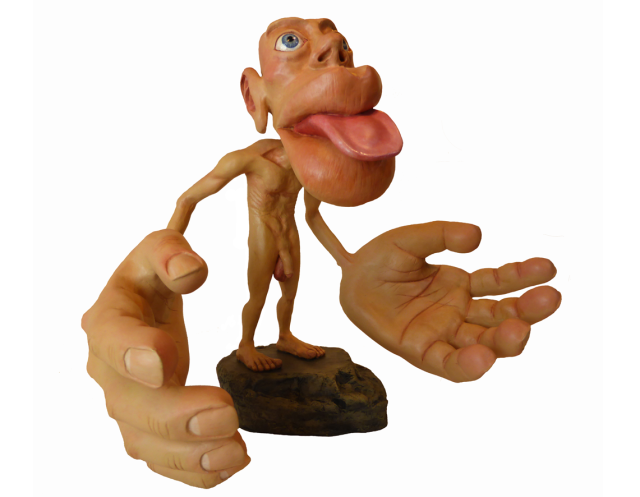
If we drew the human body according to how much space each body part occupies in the brain, we would look distorted:
enormous hands
oversized lips and mouth
a large tongue
This distorted figure is called the cortical homunculus—a map of how much neural “real estate” is devoted to sensation and movement in different parts of the body.
And two areas dominate this map more than almost anything else: the hands and the mouth
Why Hand-to-Mouth Urges Feel So Intense
This explains why behaviours such as:
bingeing
grazing
nail-biting
skin picking
thumb-sucking
smoking
chewing pens
constant snacking
can feel urgent, compulsive, or soothing rather than simply habitual.
They all activate the same hand-to-mouth neural pathway—a pathway loaded with early developmental meaning.
The Mouth: Our First Regulator
The mouth is where regulation begins:
suck
swallow
breathe
It’s the site of our earliest experiences of safety, nourishment, and connection. It is deeply linked to the vagus nerve and early attachment.
The Hands: Our First Tools of Agency
Through the hands, we learned:
reaching
grasping
exploring
affecting the world
Infants bring everything to their mouths not because they lack discipline, but because this is how humans regulate, learn, and feel safe.
A Powerful Developmental Loop
Together, hands and mouth form a dense developmental circuit.
This loop helped us:
regulate overwhelm
explore the world
soothe distress
connect with caregivers
discover where “I” end and the world begins
That circuitry doesn’t disappear with age.
It stays available—especially under stress.
So when someone finds themselves bingeing, grazing, or engaging in oral fixation patterns later in life, it’s not a failure of willpower.
It’s the nervous system reaching for the earliest, most reliable pathways it knows.
From “Bad Habits” to Nervous System Wisdom
Many people are taught to see these patterns as:
bad habits
lack of self-control
something they should have “grown out of”
But from a neurobiological perspective, these behaviors are attempts at regulation, not pathology.
They activate:
large neural territories
early preverbal attachment circuits
autonomic nervous system pathways
procedural memory around safety and nourishment
This is not weakness. It’s intelligence shaped by survival.
What This Means for Eating Disorder Recovery
When recovery focuses only on eliminating behaviours, people often feel ashamed when urges persist and confused by their intensity.
But when we understand the biology beneath the behaviour, something shifts.
Recovery becomes less about fighting the body and more about befriending it.
Instead of asking, “What’s wrong with me?”
We begin asking, “What has my nervous system been trying to protect?”
That question changes everything.
A Simple Practice for Regulation
Before eating, try this:
Pause
Gently place your hands on your face, jaw, or heart
Let your nervous system register intentional, soothing touch
Then choose what you need
This isn’t about controlling behaviour. It’s about offering the body another option for safety.
Beneath the Label Is a Body Trying to Come Home
Your body is not working against you.
It’s trying to find its way back to regulation, safety, and connection.
When we loosen our grip on diagnostic labels and become curious about the lived, embodied reality beneath them, recovery stops being a battle.
It becomes a process of remembering.
No diagnosis can walk that terrain for you.
But your nervous system already knows the way.
Want Support Beneath the Label?
EARTH – A Place to Land is a free / donation-based, monthly drop-in support circle for adults navigating:
eating disorder recovery
disordered eating
body image struggles
food anxiety
🗓 Second-last Thursday of every month
⏰ 10:00–11:30am EST
📍 Online (Zoom)
This is a space to explore what lies beneath the label—with curiosity, nervous system awareness, and compassion.
Get all the details to join us in circle here.