Why I Stopped Riding Horses After 20 Years (A Vegan's Perspective)
I fell in love with horse riding at the age of five. I couldn't believe my luck when I was told I could sit on the biggest chestnut mare at the stables. My parents saw me off as I took my first ride into the forest, most probably fretting I would fall off - it was a long way down to the ground at that age. I was hooked from that moment. My parents thought it was a stage, but it was a stage that lasted over 20 years.
Is Horse Riding Vegan?
And then I went vegan at the age of 23 and things changed. How could I condone elephant riding in Thailand, ostrich racing in Oudtshoorn and rodeo in America but still ride horses? I was faced with the moral dilemma where I loved my horse and felt I was giving him the best life, given the circumstances, but knew deep down I was exploiting him for my own pleasure.
All of a sudden, the metal bit seemed like the craziest thing to stick in his mouth, the saddle girth a constricting and uncomfortable corset, and the small paddocks in which he roamed, horribly unnatural and cruel.
Why I Kept Riding Anyway
However, I continued to ride for the next four years. Despite the unease around horse riding, I thought I needed it. It gave me a place to escape and be alone, away from people and just be in nature with my trusted four-legged, 800+kg animal. Giving up riding meant I would have a massive void to fill, from a point of view of time and identity. I wasn't ready to fully let go.

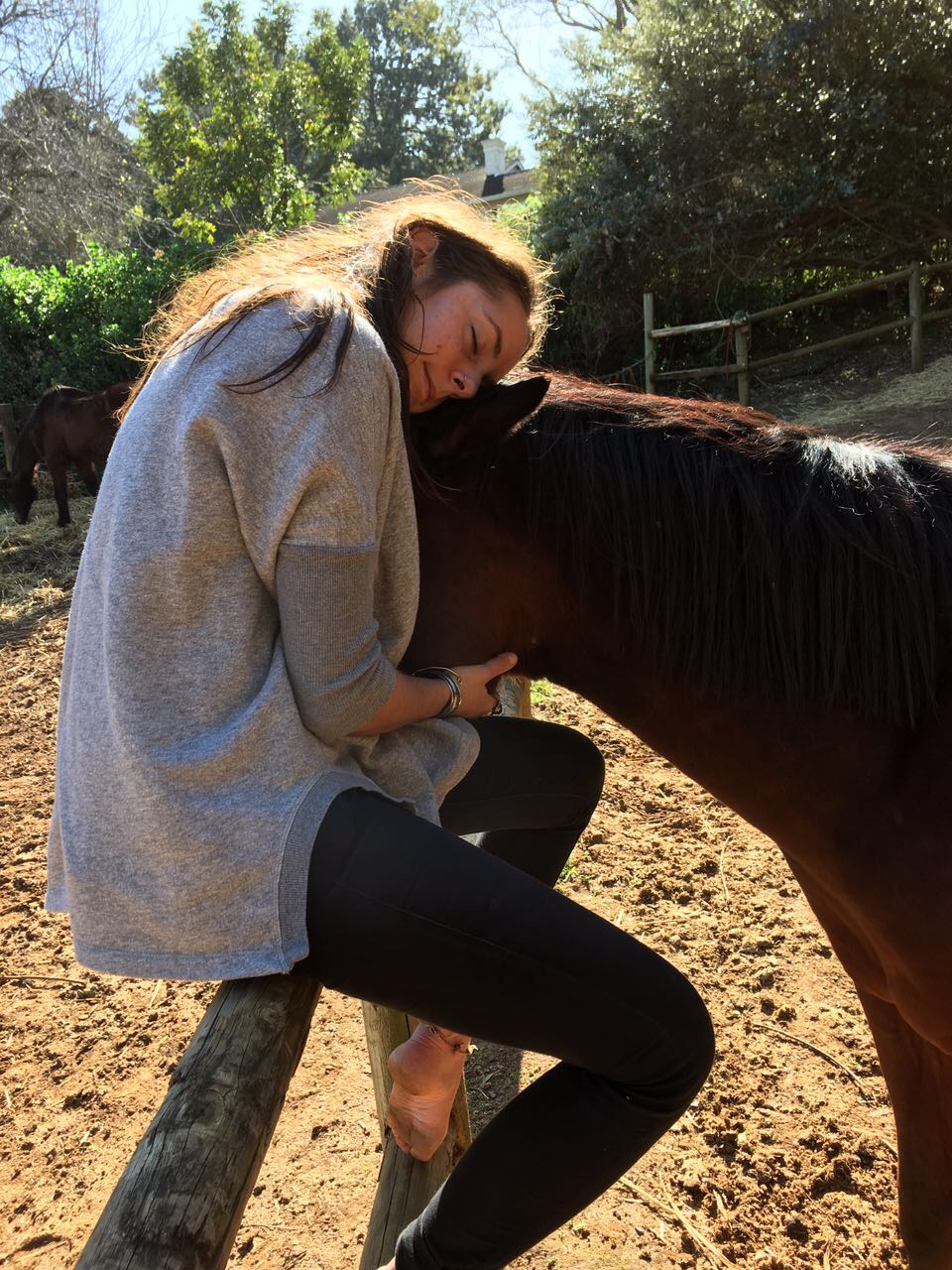
Dream Town and I, in Cape Town, 2017.
Letting Go, Slowly
Slowly, over the years, I started to reduce how often I would ride. Then, I replaced the bridle and bit with a halter. I stopped exercising him hard. I started riding even less and would take him for walks on foot and simply go grazing. Finally, I moved to a new city so I couldn't ride at all.
Almost two years went by. Despite being well looked after while I was away, I knew that he was living a small and unfulfilling life. And then my parents slowly planted the seed about retiring him. I resisted at first - I was afraid he wouldn't be able to handle the long drive up to the farm, or make new friends, or be taken care of sufficiently. I was worried he wouldn't be able to cope without me - I was "his human" after all!
These concerns were indeed valid but they were also unfounded. He is a resilient, friendly, sprightly animal who makes friends easily, and I would never send my horse to a place I didn't have a good feeling about. Additionally, my ego liked me to believe that he would struggle without me. But I am not "his human." While I could see that we shared a bond, I was not his #1 friend and he could survive just fine without me. This was a bitter pill I finally swallowed.
It would take over a year for me to finally accept the notion of letting him go, letting go of control of his life, letting go of a part of my identity, and letting go of the shame and guilt I had around being a horse rider. I kept replaying memories of the stressful and competitive environments I put him in, the use of a whip and spurs (which are normalised and routinely used - something I now can't fathom using!), and making him do things he didn't enjoy. I can remember him getting angry at me, bucking, shaking his head and trying to get out of the arena. I recall him shying away from me for days at a time after an aggravating outride or lesson, the trust between us lost, and having to rebuild it.
As with my process of going vegan, which took six months, it became clear to me that my transition away from horse riding was following a similar path. The gradual move away from it, rather than stopping cold turkey, was easier to manage emotionally (and logistically).

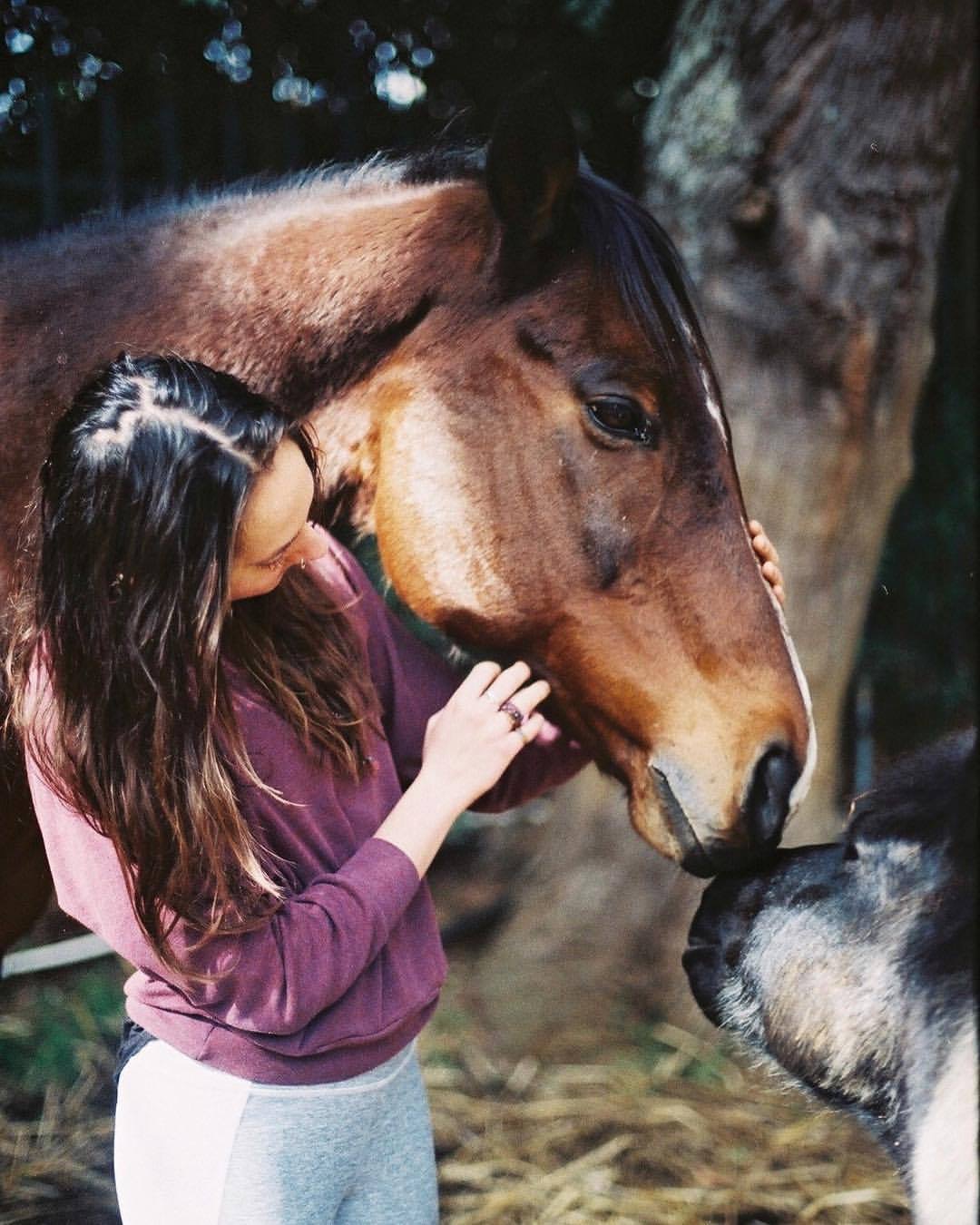
Building trust, letting go.
Why Riders Walk Away
Veganism was my doorway out, but it is not the only one. Many riders leave because the competitive world no longer feels like the reason they fell in love with horses in the first place. The pressure to place, the endless training schedules, the culture of pushing through, for both horse and rider. If you have ever stood at the arena gate feeling dread instead of joy, that is worth listening to. The question beneath is the same one I was asking myself: whether this was still serving both of us, or only the identity I had built around it.
A Better Life for a Horse
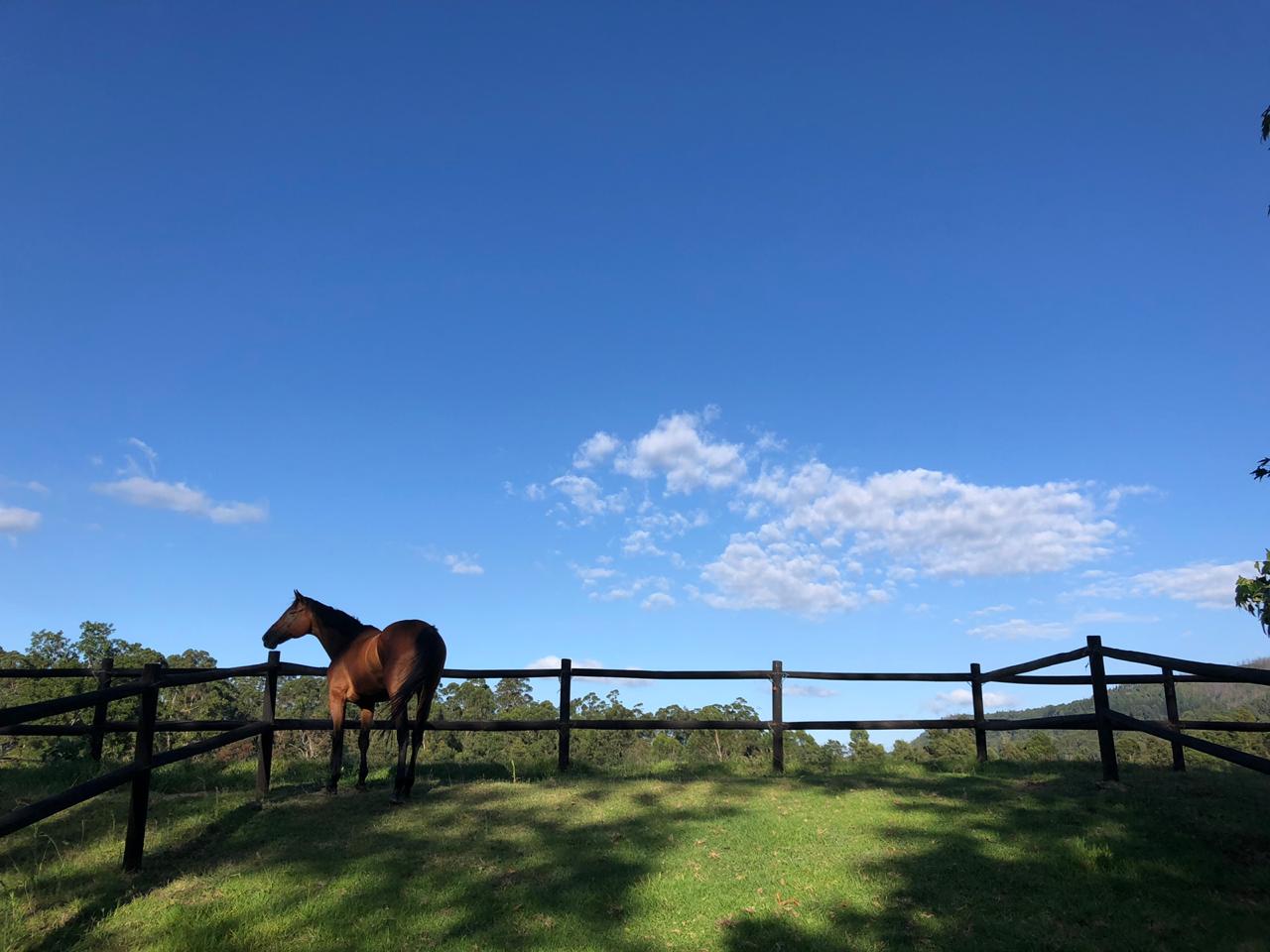
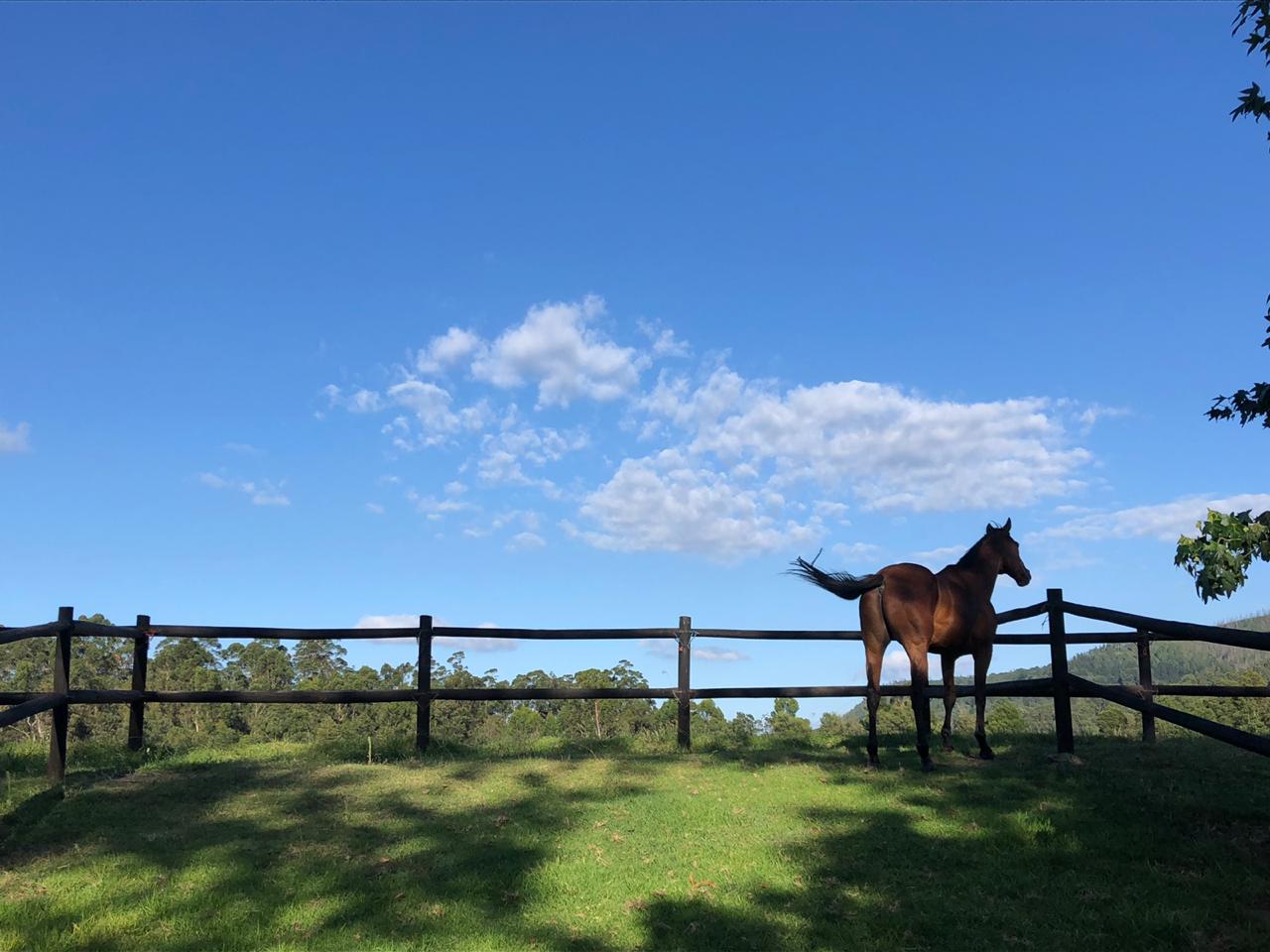
We recently found a beautiful farm about six hours away from my home city. He has only been there for a few days and has settled in smoothly and has already made friends. He is now living in a massive, lush grassy field where he can be a horse, run around, and play with the herd of other retired horses.

If You're Thinking About Giving Up Riding
While I believe that horse riding isn't vegan, I understand why it is so difficult for riders to give it up. It takes up a huge chunk of your life and forms a part of your identity. The bond between you and the horse is real and true, and it's terrifying to let that connection go and allow someone else to take care of him.
Whether your conflict comes from veganism, from burnout with the competitive world, or from a quieter sense that riding no longer resonates, trust that in the right time, you will be able to let go. You do not have to stop cold turkey. Start gently: ride less, ride softer, and begin thinking of alternative solutions for your horse. Letting go of riding may also mean letting go of a piece of who you have been, and that part of you deserves as much tenderness as your horse does. Ultimately, trust that you are giving your beloved friend a better, more wholesome life, and that they will forgive you and love you.
If this kind of letting go is familiar to you, in whatever form it takes, my monthly newsletter is where I write about it most honestly. You can subscribe here.