

Blog Articles
Click on any tag below to dive into a theme that you’re feeling curious about:

Eating Disorder Recovery Is An Additive Process, Not Restrictive
I often share with my clients that they don’t need to stop any of their eating disorder behaviours. For many people who have experienced traditional treatment this can be surprising.
*
*
*
For many of us the eating disorder has been the number one thing in our toolbox to get through life, so if we take it away it can feel like the world will crumble.
When we add other resourcing tools that have sustainability, longevity, and that can support our overall well-being in the long-run, the eating disorder doesn’t have to work so hard because we have other tools to support ourselves.
We can sit side-by-side with the eating disorder, whilst adding new support structures and tools at the same time. This means that when other tools can begin to support us more and more, the eating disorder doesn’t have to do all of the work, and we can naturally grow out of the eating disorder.
It lets go of us - rather than us trying to let it go or get rid of it.
This approach is additive rather than restrictive.
We want the approach the eating disorder recovery process with an attitude of adding in rather than taking out and restricting.
This means that rather than taking away the eating disorder (and all of its strategies and coping mechanisms), we resource and add other resources and skills to the pot.
Recovery is not about stopping the disordered eating patterns in one go. This almost always ends up in feelings of chaos and terror. If someone is told that they can no longer engage in the one coping strategy that they know and that undoubtedly helped them survive and get to this point, it results in gripping on even tighter to the eating disorder.
An additive approach recovery from an eating disorder, disordered eating, or diet culture can look more like this:
We add more awareness when engaging in the eating disorder behaviours.
We become present to the eating disorder strategies of restricting, ignoring hunger pangs, purging, binging etc. These behaviours are numbing at their core, so this is the first step: to stay present when engaging in a numbing pattern.
We add more awareness before and after the disordered eating pattern has occurred, noticing triggers and habits and changes in emotion.
We start to track what activates us during the day, and the accumulation of stress and somatic triggers, and how that build-up eventually leads to an eating disorder behaviours manifesting.
We want to start painting a clearer image of what keeps an eating disorder going and looping and driving.
We also want to track what happens after engaging in food or body strategy. What emotions arise, what activities do you do, what physical sensations are present?
We want to develop an understanding of how we feel afterwards, as this also keep the cycle going.
We add more resources, tools and recovery skills to the toolbox so that we don’t have to solely rely on the eating disorder to survive.
This includes developing body awareness and nervous system regulation in order to be with discomfort, charged energy, unknowns, and one’s emotions in a grounded, present, connected way. We learn how to thrive.
We want to add more resources so that we have greater capacity to turn towards the vulnerable parts and feelings that lie underneath the eating disorder behaviours.
Indeed, underneath all of the food behaviors, underneath the disordered eating patterns or the eating disorder behaviors, is something so delicate and tender.
Underneath the rigid food patterns, underneath the over-exercising, underneath the binging, underneath the purging, is something so young and small.
Underneath all of that harshness, shame, guilt underneath, control, domination, and persecution is something so soft, and something so vulnerable.
This is why it’s so important to approach eating disorder recovery with a lot of softness and support, rather than fear tactics or punishment. The body is already in a fearful protected state and so the treatment of eating disorders should be very kind, compassionate, and full of grounding resources.
When we can connect to those deepest, most hidden aspects of ourselves with compassion, we start to reintegrate the fragmented parts back into wholeness.
By calling back home the parts that we have ostracized, ignored, or pushed away, we begin to experience greater self-acceptance, self-compassion, a sense of belonging.
We invite all parts to sit around the fire, each one welcomed, nor matter how much shame, dirtiness, guilt, badness, grief, or burdens they may carry. No longer rejecting aspects of our history, our experience, ourselves, we can weave the lost and forgotten threads back into the fabric of the wholeness of who we are.
Eating disorder recovery is adding more foundation, more connection, and more resources that establishes a sustainable inner core that gives us the capacity to turn within and to look at these vulnerable parts from a centered place.
As such, it is no longer engaging in the eating disorder or restricting oneself from utilizing the food and body coping mechanisms, but rather, recovery is additive process whereby we develop more embodied presence, body awareness, and sustainable resources.
This is how we build a foundation alongside the eating disorder, so that the eating disordercan naturally let go of us.
Photo by Avrora Bch on Unsplash

Resistance in Eating Disorder Recovery
Where are you noticing resistance on your eating disorder recovery path? And importantly, how does it show up in your body? What does resistance feel like?
*
*
*
it is very common to come up against resistance as you walk the eating disorder recovery path. In fact, feeling resistant indicates that you are at meeting an important growth edge.
Maybe you experience resistance to rest, or to include a different ingredient to your cooking, or to try a new restaurant.
Maybe you experience resistance to eat when you’re hungry rather than at a predetermined time, or to allow someone else cook a meal for you.
Maybe you feel resistance to communicate more openly, or to share when you feel nervous, anxious, sad, happy, or excited.
Maybe you notice resistance when going clothes shopping, or when confronted with a mirror.
Maybe you feel resistant in allowing in more connection, play, or pleasure.
Resistance is a beautifully revealing sensation to work with in your eating disorder recovery. When you meet it (which can happen at any moment), stay at the boundary of the resistance. Stay with it. Feel it. Notice where it is in your body.
When we can stay with the resistance for a few moments, rather than pushing it away through food and body strategies and coping patterns, we may notice that the resistance has something to share, that it has wisdom to impart, and that it has clues to give you about what your next step may be in your recovery.
So, take a note for yourself when you come up against resistance:
How is your body telling you there is resistance? How do you know it’s there?
What does resistance feel like?
Where does the resistance live in your body?
How much space does the resistance take up in your body?
Does it have a texture or colour?
Does it have a sound or some movements that want to be expressed?
What is the resistance trying to protect?
What is the resistance afraid of?
In this way, we move from the mind and into the body, and we start to befriend the resistance.
The moment the resistance spins stories of “I can't do this” or “I'm not good enough”, we actually want to pause, notice, and get into the body.
Feel the inner resistance and sense what it actually is. Observe what is lying underneath the body sensations. Is there an emotion? Is there movement that it wants to express? Are there sounds it wants to make? Are there words that are waiting to be shouted? How does it want to breathe? When you can give the resistance form and “three-dimensionality”, it has the opportunity to express itself and to ultimately move through and out.
Remember, resistance is normal and is part of recovery, change and growth. Often when there is big resistance, the growth potential and life force that we can access is huge!
When we pause with the resistance, we are bowing to the parts within us that have worked very hard at protecting us over the many years - and so they require gentleness, respect and kindness.
Rather than pushing past the resistance or collapsing in defeat upon meeting it, we take a breath, and give it space to express its needs. Embody your resistance, give it space to be heard, seen, and recognized.
Bring it to life and see what is has to share about your recovery, your history, your patterns, and what it is needs.
Don’t push past the resistance, force it out the way, or pretend it’s not there (as this is thesame energy that the eating disorder operates in).
Rather, when we can meet it, stay with its shape, and hold it with compassion, we go at a pace that can maintain equanimity, acceptance, and capacity.
This ultimately, eventually, softens the resistance and we unlock a new layer within our recovery.
Photo by Towfiqu barbhuiya on Unsplash

Why Working with the Gut is Key for Eating Disorder Recovery
Trauma is not in the event itself, but about what happens within the nervous system, which impacts our digestion system, and our ability to have health, regeneration and flow in this system.
*
*
Our digestion gets impacted due to trauma. Eating disorders are a trauma response that exacerbate the digestive system, and as such working with the digestive organs are important for recovery.
Now of course, if there’s a history of restrictive eating, bingeing and restricting, weight cycling, or dieting, the gut is going to be affected by these coping behaviours that use food. But this connection to the gut goes back to an earlier time in our lives and connecting to the gut is an important piece of healing from trauma and eating disorders.
The gut is considered our first brain and through the vagus nerve connects to the brain. There's a direct communication gut to brain, brain to gut. The chemicals that we find in the gut are also the chemicals within the brain. When we heal on a gut level, we support our brain healing too.
There is this superhighway between the gut and the brain that connects the two through the vagus nerve In fact, 80% of nerve information goes from the gut to the brain (where the brain interprets the information coming from the gut and then sends a message back down to the body) and only 20% of nerve information goes from the brain to the gut. The 80% is called "efferent nerve pathways" and the 20% is called "afferent".
This means that the gut is involved in almost everything we experience. And because it is linked via the vagus nerve, our gut is part of our social engagement system - which needs to be activated if we want to heal from trauma and eating disorders.
When it is in good health, we find more flow and ease in our ability to connect with others, to create and take in information, to instill healthy boundaries, and to utilize supportive resources.
Think about your history: was there high stress around the dinner table or when eating was going on? Do you remember feeling a lot of fear or anxiety in your belly as a child? Did your survival instincts increase when it was mealtime?
Over time, our system connects eating with stress. When there’s heightened levels of stress chemistry in our body, the gut won’t be in a good flow. This leads to gut challenges, like IBS, constipation, chronic diarrhea, food not being digested properly, as well as mental issues including brain fog, distractibility, depression, social anxiety, and all of this discomfort can exacerbate eating disorders.
When there’s been chronic stress (which can also be perpetuated from diet culture) or early childhood trauma, the stress survival energies get trapped inside of us which makes it incredibly hard to be in the body.
With the trauma energies and memories still swirling around with nowhere to go to be processed, we find ways to not feel all of that. We may start to exist in the mind, cutting ourselves from the body, and ignoring its subtle cues.
This means that it can be challenging to connect to the gut – which is also the place that governs instinctual, internal, intuitive knowings (there’s a reason why we say “I feel it in my gut” or “I have this gut instinct”). This is the concept of interoception – sensing and perceiving what is going on inside of us.
Gor many people who have experienced trauma, that 6th sense has become dimmed, and as a result, may make choices that aren’t good for them. They may only realise that they are tired when they are about to faint, or that they are full once they have reached a point of discomfort. In this case, the cues from the gut are harder to detect and can only be heard at the extreme edges.
For people with eating disorders reestablishing interoception and connection to the gut is key.
For people with an eating disorder, there is often a feeling of not having goodness and that there's always something missing (which can be further internalised as “I am not enough” or “something is wrong with me”).
These feelings can be shifted when we start to make connection to that first brain, to acknowledge it, and to work with it with gentleness, intention, and presence (not a “fix it” mode).
Through somatic awareness practices and developing tools that support nervous system regulation, within the context of eating disorder recovery is what I support my clients with, and together we bring in the support from the bottom-up, from the gut-up to heal at a body-first level.
Over time, as we let the gut know we are here for it, and listening, it begins to reorganise to flow and works in the way it’s can work. There is an integration of the whole system.
We have more capacity to feel and digest our emotions in the present moment, make aligned decisions, create spontaneously, instill healthy boundaries, trust in ourselves and what is good for us.
An intuitive wisdom starts to emerge from within: we start to know what is safe or not safe for us, what resonates or doesn’t, and what brings clarity, coherence and connection to our lives.
Photo by Imani Bahati on Unsplash

Nervous System Rewiring for Eating Disorders
Eating disorder recovery is a self-exploratory learning process whereby we come to understand what the signs of stress are in our own bodies, how or bodies communicate what it takes to survive and thrive, and what happens when we miss these cues.
*
*
*
Eating disorder Recovery is not just about eating more intuitively. It’s a process of understanding our own physiological responses to safety and stress - what makes us tick the right and not so right ways.
This requires learning about our own autonomic nervous system, how it’s wired, why it’s wired in ways that it is, how it is currently resiliently working for us right now.
This requires becoming more self-aware and embodied - being able to have a more accurate gauge of our internal responses to life - rather than how we may look on the outside, or how we may think we are doing.
For many people with eating disorders, disordered eating, or living in diet culture, we have become used to pushing through stress, pushing down feelings, and have become used to saying, “Everything is fine.”
I remember in the depths of my early eating disorder days, I strongly identified with being superhuman. I believed that by eating small amounts, exercising a lot, pushing through, and not feeling any sort of big emotion, I was some kind of superhuman. However, my physiology was struggling, my nervous system was stuck in a deep freeze, and I had no idea because this go-go-go had become my norm.
This norm had resulted from a history of:
Suppressing my appetite and tiredness cues so when I finally wasn’t able to go anymore, at least I had an excuse to slow down.
Learning early on to hold back my tears because of fear of being judged as too sensitive.
Observing that it wasn’t nice to get angry, so I developed grudges and feelings of resentment instead.
Remembering the golden rule “Don’t make a mountain out of a molehill” so I doubted my reactions and feelings.
Fearing to speak up or express myself because it was better to please others than to cause a show or conflict.

Nervous system rewiring for eating disorder recovery
Blocking my truth and my biological impulses, as well as pent up survival energy and stress chemistry in my system, resulted in the development of an eating disorder.
A large part of my own recovery has been about pausing and checking in with my body, and asking questions of what it may need, where may there be held tension, and how can I attend to myself moment to moment?
This process of acknowledging and pausing at intervals throughout the day gives the habitual go-go-go energy to reset, metabolize, and ‘come down’ so it isn’t on high all the time.
We may realize how starved our bodies are for self-care and nourishment (on different levels, not just food). When we pause, this creates more space and flow in the system, and we may start to realise that we can hear our hunger or fullness cues more easily, or that we can identify what foods we genuinely want to eat, or that we have more capacity to socialize and engage in more joyful activities because the system is no longer in a state of go-go-go or shutdown.
Shutdown is what happens to our nervous system when we’ve been going for so long, and often shows up in eating disorders as depression, low metabolism, or low energy).
The eating disorder recovery process will ask us to change, heal, grown, unlearn, and relearn.
The way we are wired, which is often towards unhealthy patterns, as is with the case with disordered eating, will be stretched, disentangled, and rewired towards healthier patterns and choices with nervous system education and support.
This is a somatic-based approach to eating disorder recovery that can sometimes feel painful and threatening to the person’s psyche, as well as their physiology and biochemistry.
When something has been done the same way for so long, when change is imminent, we may feel resistant, suspicious or doubtful. We may even want to hold on tighter to the eating disorder strategies because we know deep down, they are slipping from our grip.
This is when we need to remember why we are on the path and call in all the positive resources, because it is possible rewire the habitual firings of the nervous system.
And it takes patience, perseverance, courage, and commitment to face the undoing and shifting of old stress survival patterns into new patterns that supports our multidimensional somatic welling.
We all have the healing capacity to do this work. It requires a knowing that the body can heal, that you deserve the healing, and a willingness to embrace the process, however bumpy it may get.
Over time, areas in the body that were stressed from the eating disorder, like the digestive system, immune system, and tissues heal and recover.
Old programming and conditioning rests and rewires.
Intuition and self-trust emerge as we return to our natural capacity to heal.
As we learn the language of our biology, embody them, and become more attuned and self-aware to our internal and external environments in the present moment, the recovery process leads us to the medicine we have been looking for: ourselves.
Photo by Sage Friedman on Unsplash

Dance and Embodiment Healing for Eating Disorder Recovery
I had a complex relationship to movement during the darker depths of my eating disorder days.
*
*
*
I would use exercise to numb, suppress, discipline, or run away from whatever I didn’t want to feel or face. Exercise and movement had become weapons that would punish my body and put me back in line. Do you relate to this?
As I started to acknowledge the layers of the eating disorder, I realised that this way of judging, comparing, demonizing, and competing with my body was just. not. working.
I noticed that I didn’t know what it meant to move my body without it being a duty, obligation, or punishment. I remembered how as a child I loved to move just for the sake of it, not for anyone else but simply to feel the fire of my own heart dancing.
At this juncture, I stood before a sea of questions:
What kinds of movements did I actually enjoy doing?
If I am only existing in my head where is my body?
Why do I need to exercise to "deserve" my food?
What scares me about going down and into my body?
In what ways are the old ways of exercising helping me feel sane?
What are other ways that I can support my well-being other than punishing exercise?
What am I truly afraid of?
My recovery reminded me that while I had not tended to my inner fire, it was still alive. My inner dance was yearning to be reignited, for its embers to be fanned, and for its warmth to glow through me. My body wanted to be felt, tended to, seen, and allowed to express.
My heart wanted to be on fire again.
And so, I reached down and held out a hand.
At first it felt awkward, sometimes scary, and sometimes confusing, but over time, bridges of communication built, and trust, safety, and connection were established between me and my body.
A large part of my eating disorder recovery has been learning how to move my body in ways that bring joy, flow, grounding, emotional release, and authenticity. It has been a long process of unlearning that I don't need to move in a perfect way, and that any and all expressions are welcome.
What a relief.
This unlearning journey has brought me to conscious dance and intuitive movement. These practices have helped me connect with my body, trust my impulses, acknowledge my feelings, and to surrender to the unknown and unfolding dance (of life).
Intentional movement spaces are like portals that support us in shedding the old ways of separation and disconnection and to step into new ways of self-trust and inner wholeness.
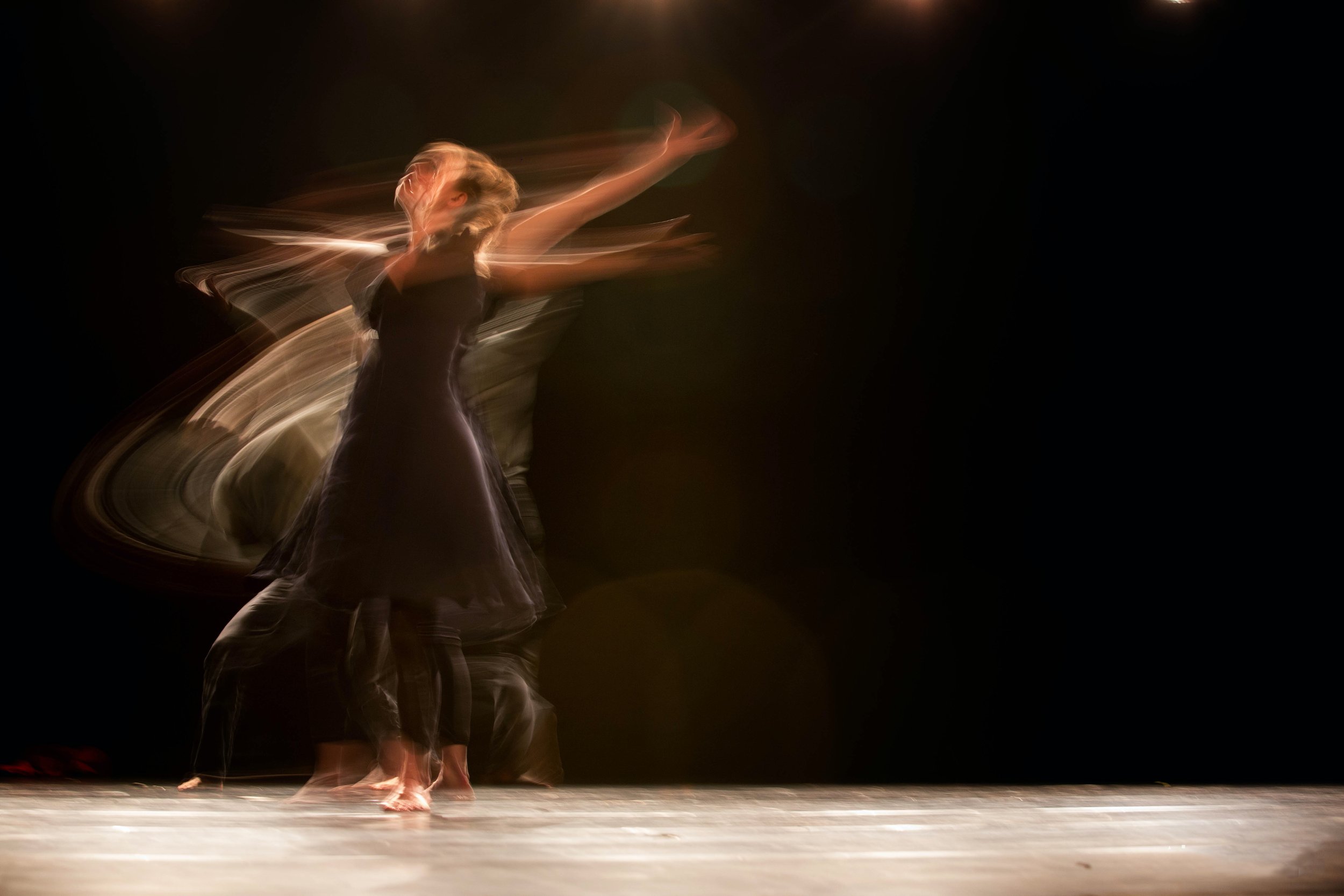
For many people in eating disorder recovery, there is a deep yearning for authentic, genuine, and wholehearted connection. However, there is often fear and old wounds around connection and expression that need to first be met.
Over time, the eating disorder recovery path reveals opportunities to reconnect with what resonates with the heart and how to express the soul’s deep calling. Through intuitive movement, we nourish the conditions to remember why we are here at this time, and why we inherently deserve to be here.
This is the dance of recovery.
Dance is the song of the body.
Whatever your song is, as it changes from moment to moment, I invite you into this dance journey.
When we are able to move in a rhythm and dance the dynamic dance of our emotional landscape that is sustainable, life-supportive, regulating, and containing, we are able to ride the ebbs and flows of life without needing the eating disorder strategies.
When a movement practice is built to support all emotions and the fullness of our expressions, in all of their shapes, textures, and tones, we can embody a frequency and move in ways that call in a reality that is free from destructive food and body rules.
When we dance with our bodies and with our breath, we create physical and energetic flexibility that supports the psyche to hold the most precious parts within us that yearn to be held, and ultimately joyously danced with.
Then, our dance becomes a prayer for our recovery where the body is the invocation itself.
Photo by Ahmad Odeh on Unsplash

Expanding into Receptivity for Eating Disorder Recovery
Eating disorder recovery is about developing capacity within our own nervous systems to be able to receive.
*
*
*
When there are the tendrils of eating disorder behaviours, there are usually fears of receiving. Through the tactics of the eating disorder, which is to defend, armour, protect, or push away from anything that gets too close, one is unable to receive.
Why is receiving so hard?
Receiving requires us to take all of the food in, to chew and swallow all the way through, to slow down enough to digest. Receiving asks us to be intimate with food and to not push it away even when it feels like it is sitting deep and full within us. To be in recovery means to expand our capacity to receive.
Being able to receive is deeply intimate.
It requires being seen. It requires being close to another. It requires connection. It asks an individual to acknowledge their worthiness, deservingness, and their existence – because without that, who is it that receives?
Developing capacity to be with the present moment – aka connected in and to the body – is one way to receive whatever is here, without using food and body tactics as strategies to reject it.
And of course, being present is not easy. An eating disorder’s main goal is to exit and reject the present moment. So by developing nervous system capacity and regulation to receive more glimpses during the day, embodied, connected and mindful, are ways to start receiving more
This is what my recovery is focused on right now. I'm paying attention to the moments where I restrict, deny, or reject what is coming towards me to be received - be it a compliment, a hug, words of support, or eye contact.
It is often in the places of deeper connection and intimacy where I don't want to receive. These are the places where the old eating disorder voice raises its head and wants to build walls of defense so that nothing can come too close. And it’s in these exact places where I have the opportunity to choose differently: to say yes, to expand, to take up space, to allow my voice to be heard, to embrace, to allow for (safe and consensual) intimacy, to believe in myself.
Stepping out of self-rejection and restriction and into receptivity means stepping out of feeling wrong and into worthiness.
I invite you to practice looking for moments in your day where, instead of rejecting or restriction, you embrace and embody the art of receiving.

This means that as we open up to more receiving, we start to release patterns of restriction.
Whatever form your eating disorder or disordered eating patterns manifest in, they are usually all tied up in restriction. Either there is restriction of food, which can manifest as anorexia or orthorexia, but can also manifest as binge/rebound eating which is a response to earlier food restriction.
Restriction can also come in the form of restricting your feelings and emotional expressions (like sadness, anger, grief, or joy), restricting your needs and desires, restricting play and pleasure, restricting social interactions, or restricting yourself from spontaneity and new situations. As such, an eating disorder is often a symbol of some kind of restriction that is happening in another aspect of your life.
When did you feel you had to restrict or hold back a part of yourself in order to belong or feel accepted or recognized?
Can you identify what part of yourself that was that had to go into hiding?
Eating disorders indicate parts within us that have had to hold themselves back in order to stay safe – because at one point freely expressing, expanding, spontaneously creating, and taking up space were not supported. These are the places from which eating disorders form.
Where in your life can shift from restriction to expansion?
What stands in your way?
What are you protecting yourself from?
Are there small moments in the day where you practice, embrace and embody expansion and deeper connection with your body?
It is important to note that making connection with the body takes time. When there has been a history of eating disorder, connecting with the body is often the last place we want to go, and it’s the place we need to venture into.
From my own experience, I realised about at some point in my recovery that I was still very much in my head and still triggered and afraid of my body. Walking my own recovery path for the last 14 years eventually led me to embodiment practices. This was the work that was missing in the early days of my recovery. A big piece in this work of reconnecting with the body has been bringing to mindset of a blank canvas.
When I started this work, I had so many expectations. I thought I would finally feel all of my feelings, identify all the nuances of my physical body, release all the traumas held in my cells and tissues, and be free! That has not been the case. I’ve learnt that the best thing I can do is to not try force connection or try change, manipulate or create an experience – and to rather just arrive as fully as I can in each moment ready to engage or not.
Sometimes the conditions are right for me to venture in and other times it’s not the right moment, and to even allow the old reactions of shutting down and closing off to happen – and to not beat myself up about it.
This is the tool of compassion at work and is one of most important tools we can practice in our recovery. I’m sure many of you know that in the depths of an eating disorder, little compassion is present. So when we bring compassion into the picture, we are already shifting, healing, recovering, and transforming. Where in your life can you bring a touch more compassion?
Photo by Lina Trochez on Unsplash

Intuitive Eating From a Nervous System Perspective
We need to feel safe enough to eat intuitively.
*
*
*
In order to eat intuitively (aka following our impulses, listening to hunger and fullness cues, honouring desires around food), we need a regulated nervous system and a felt sense of safety. And Feeling a felt sense of safety is key to eating disorder recovery.
Safety requires not only the absence of threat but also the resonate presence of a nurturing and attuned other. When there is a grounding and a holding, this then opens up the capacity to tune into our desires, wants, and needs around food that stem from a clear and safe place rather than a place of fear.
Being able to feel that safety is complex in a world of diet culture where:
People who do not fit into the “ideal” shape are discriminated against, punished or bullied.
We have to dodge fat jokes, and weight loss and diet TV shows.
Certain people do not receive the adequate healthcare due to their size.
Before and after pictures are glamourized.
Certain foods are moralized whilst others are demonized.
Thinness is equated as a moral virtue.
To feel some kind of acceptance and belonging, we need to fit into to a certain body type.

Remember this feeling?
This is “normal” in our culture and it results in a chronic state of stress, leaving our entire physiology in a constant hum of danger and in a survival response.
When the body holds onto patterns of protection and defense, it does not have the spaciousness, flow and warmth to relax into intuitive or normative eating. It is geared for survival and will make whatever sacrifices needed.
For many people with eating disorders, it has not been safe to truly feel into their hunger cues or food desires. On a deeper level, it hasn’t been safe for them to feel or ask for what they want. Going a layer deeper, some people had to turn away from themselves and play a role that wasn’t them for another person. Boundaries may have been crossed. Needs may have not been met.
If we weren’t taught how to establish boundaries (or boundaries weren’t able to be instated), expand into safe relationships with others, or learn how to sense into the physical sensations or emotional waves within ourselves, we may have trouble identifying hunger and fullness cues, or choosing what food we want which could lead to restriction or binging.
This lack of a sense of self may result in difficulties in making decisions, identifying emotions, needs or wants, and as such may find it challenging to ask for help (because how do you know what to ask for).
When we haven’t learnt to come fully into our bodies, feeling the edges of where we begin and where we end, it can be hard to notice subtle hunger cues which include cues like general irritability, thoughts about food, distracted by a food image on social media, or a general lack of motivation. It may take a loud, grumbling stomach or feelings of dizziness or nausea before something registers hunger.
As we come into our own embodiment by feeling proprioceptively where we make contact with the outside world, or feeling how our bodies organise itself around a core or central line, there is a sense of pushing into things which give us the sense of our existence from a somatic, bottom-up perspective.
This shifts the inner beliefs from “I don’t belong”, or “Something is wrong with me” to “It is okay for me to exist” and “I am welcomed and wanted in the world”. When things in the body shift, so do our beliefs.
We are able to trust our bodies again and start to make food choices that come from our inner voice rather than something outside of us.
As such, eating intuitively is a revolutionary act in the face of “normal” society.
Eating from a place of felt safety changes the way we digest our food, our emotions and thoughts.
Choosing to eat intuitively has the power to change the collective narrative.
Eating intuitively is the ability to move from external rules to internal cues, and is a state that embodies belonging and self-acceptance despite what the outside world says.
Photo by Ross Sokolovski on Unsplash

Holding and Being Held: A Somatic Journey for Eating Disorder Recovery
When we are radically brave enough to let go of the eating disorder patterns and allow our intuitive eating and intuitive being to rise, there is an awakening.
*
*
*
We cannot talk ourselves into eating disorder recovery. It is a somatic process. There is a beautiful dynamic of holding and being held, and is the embodied journey that those in eating disorder recovery experience.
When we hold ourselves with an energy of unwavering stability, committing to love ourselves no matter what, there is safety to go deep within, listen, and live from an authentically aligned and embodied place.
When we offer ourselves an inner ground and stable framework to move from, we are free to soar, infinite possibilities blossom and rise.
For some, inadequate support was given as a child; there may have been too much or too little. And so, to reconcile this misattunement, they had to learn how to hold themselves without receiving a clear reflection for how to go about it. This is where eating disorders, substance and other behavioural addictions, somatic patterns of tension or collapse, and beliefs around unworthiness or not enoughness develop to provide protection (or holding) for the psyche.
Eating disorder recovery is learning how to hold ourselves differently and start to acknowledge, with a kind gaze, what it is that we are holding – which is often something sacred, vulnerable, and so deeply precious.
And those sacred, precious, and sensitive parts of us desire and need the most tender holding and support.
Not only do we need to learn how to support ourselves in a new light, but we also need to believe that all parts of ourselves deserve and are worthy of the deepest care and love.

What are you holding and who is holding you?
We can only hold these precious parts when we have taken the brave step of going into the metaphorical forest. When we enter this place, we enter the process of initiation. Only by going into the depths of the dark forest can we view our stories, traumas, intergenerational and collective wounding, limiting beliefs, and blind spots. This is the shadow work that we all must do to step into an integrated, expansive, grounded, and authentic embodiment.
By digging into the forest soil, we begin to clear the old wounds and churn the soil. The parts of us that were hidden deep in the ground come to the surface to be seen and held. At their core, they want to blossom and soak in the warmth of sun and the freshness of water.
Through the conscious creation of an inner soul garden, we plant seeds of humble and good intentions, watering and tending to these precious seeds with care. When the right conditions have fallen into place, the seeds grow into treasures.
The treasures are found in the wounds.
Plant medicine and Psychedelics helps us see, hold, and be held by own our treasures.
We see ourselves on a deeper level and the truth of our inner beauty is revealed to us. When we recognise (and remember) the medicine that resides within, we perceive the outside world in the same way, leading to an increased sense of interconnection.
Through the support of sacred plant medicine, microdosing, and psychedelics, they reflect back to us reminding us of why we are walking this path, our value, and our potential.
When we develop the capacity to embrace ourselves and believe that we are deserving to be embrace, we from a secure attachment within ourselves based safety, integrity, connection, contribution, and love.
1. CLEAR YOUR INNER OBSTACLES
The first step toward finding the balance between holding and being held is to attain a state of openness. That requires observing all the moments when you put yourself down, spin into a shame or guilt spiral, or judge yourself. This is the first step: noticing the patterns of inner obstacles, “hidden enemies”, or negative self-image.
It is possible however you may fear that without your old, familiar sense of ED-identity, you are nothing. I know the thought all too well of “I don’t know who I am without the ED” - but as we observe our negative self-image, we start to see the illusions and veils of untruths (which is a process that plant medicine and microdosing can support us in) and notice how the eating disorder is holding us back. Over time, a new way of perceiving and relating to ourselves arises that is rooted in worth, connection, and freedom.
2. OPEN TO YOUR POTENTIAL
By observing the clouds of negative self-image and becoming more familiar with this new sense of self-worth, you will begin to feel an even greater opening and sense of peace. The ability to move from a spacious place where there are feelings of inner harmony, worthiness, and clarity, a sense of unlimited potential arises.
3. NURTURE A SENSE OF WARMTH
Once you have realized a sense of openness, confidence, and unlimited potential, then a feeling of warmth of emerges. Unlike the eating disorder that is cold, distant, and rigid, the embodied self is warm and joyful. From this warmth, flexibility, softness, and creativity can manifest. Once the clouds have dissolved, revealing the clear, vast sky, that the warmth of the sun’s rays can nourish the inner garden. Warmth is the place from which love, kindness, compassion, expansiveness, and creativity arise. Warmth is the language of the heart and when we reside in this space, we can hold ourselves and be held wholeheartedly and unconditionally.
This is embodied recovery. The process of holding ourselves and allowing ourselves to be held is a somatic healing journey that changes the ways in which our body supports itself and how moves through the world.
This somatic process shifts how we relate with others, communicate boundaries, processes emotions, create structure and flow in our daily lives, recognize safety and danger, and integrate beliefs about ourselves and the world.
When we hold ourselves differently, and allow ourselves to be held, we nurture and value ourselves in a new light, and we remember why we came to this Earth, our purpose, and the medicine within.

How To Recover From An Eating Disorder
Eating disorder recovery is a process of learning and developing certain skills.
*
*
*
Eating disorder recovery doesn’t just happen out of the blue. It takes practice - we are practicing a different way of being with our bodies and being with the world.
By definition, eating disorders (which can be considered as a form of addiction) include the cycle of relapse-recovery; recovery is thus a process of learning how to manage and live without the eating disorder behaviours. Relapses, setbacks and challenges are expected, and it is through these moments of relapses (aka opportunities for growth) that we get to look at our recovery with more awareness and understanding.
It's a series of conscious and committed efforts that requires patience and perseverance. It takes time to develop any kind of skill, and recovery asks us to upgrade and develop ourselves to become the person whereby the eating disorder is unable to exist in our reality.
There is a major misconception to recovery that says that one plant medicine or psychedelic journey or a trip to a treatment facility will grant us freedom. Whilst these external supports can be catalysts, supports, and offer structure, they can't cure us. And the only way out of the eating disorder is through all of the entanglements that got us there in the first place. And so it requires a person to be open and willing to look within and develop oneself beyond the eating disorder.
Looking within is one of the most important pieces, and is a key skill to develop for recovery. Looking within is a skill. We can get better at it with practice. Accessing liberation is through this practice of self reflection, that is looking at ourselves honestly, and to see the truth behind our own psychology.
Honesty is also an important skill to develop in disordered eating recovery, because an eating disorder can be very sneaky, living in the shadows. When gripped by the eating disorder, people often lie, cover up, hide, and pretend all ok. But being honest with where we are at is a hallmark of recovery and a skill that we can develop.
When choose to journey with psychedelics, we are often faced with the honest truth of where we are at as they take off all the masks, veils, and fake layers, shining light on all the shadows we were hiding from. Psychedelics us prepare a new, fertile soil and plant seeds of change within. Plant medicine, like Ayahuasca, psilocybin (including microdosing), Iboga, or Changa supports the repatterning process, providing us with opportunities to let go of old ways of being that no longer serve, thereby making room to consciously create new beliefs, behaviours, and choices.
Working with sacred plant medicine or psychedelics requires inner courage, self-compassion, perseverance, patience, truth-telling, and trust. We learn how to lean into and inquire about the discomfort, to regulate our emotions in challenging moments, and to harness the body as an anchor and resource as we fully face ourselves.
Preparing for a plant medicine ceremony is about widening our capacity to gracefully be with the ebbs and flows that occur in a psychedelic journey - and beyond.
When we prepare for a journey, we are developing skills of the heart, mind and body for the ultimate ceremony: the ceremony of life.
Indeed, once the ceremony ends, we are required to take the necessary action to care for our inner garden and nurture the seeds. This is called integration: turning downloads into daily action and practice.
We are always practicing and developing something.
When we look at ourselves in the mirror and the thoughts and judgments around our body shoot up and out, this is what we are developing and practicing for ourselves. Versus, if we think something along the lines of “I'm beautiful”, that is also practicing and developing a way of thinking and being.
What ways of relating to yourself are you practicing and solidifying within your consciousness?
So often we think the same thoughts, feel the same feels, and do the same things. As such, we are refining and solidifying a set of beliefs, feelings, thoughts, and actions. These sets of patterns that we have developed, day in and day out, create the blueprint of our reality.
Practicing recovery (aka transformation) means that we are actually practicing something different to what we currently practice. The more we practice recovery, the more we can direct our healing trajectory, and naturally mature out of the eating disorder behaviours, into our innate healing states.
This way, when we are ready to step into recovery, we have already been training for the truth.
Developing ourselves in this way takes time, especially if the eating disorder or disordered eating tendencies have been ongoing for many years. This is often a messy process - as is learning any new skill.
Developing ourselves for recovery begins when any of us realize that something needs to change. When we realize something needs to change, there is an increase of awareness and expansion of our consciousness that points us to another way of being and another reality that exists out there. Indeed when someone is unaware of the problem, it is hard to develop oneself.
However, if the awareness that something new is out there, there is a process (with stages) of change that many of us travel through as we learn, grow, heal, and evolve.
In order to achieve a goal, or get unstuck from an old place, we will likely move through these stages of change, as outlined by researchers, Prochaska and DeClemente, and Noel Burch. It is much easier to move through the stages of change when we know what they are:
The first stage is precontemplation. This is a stage where we are unaware or in denial of problems. In this phase, we are not ready to make change, and we are not ready to develop ourselves for recovery. A person is unaware that recovery is possible, nor are they are aware that there are skills necessary for recovery. Another term to call this is unconscious incompetence.
The second stage is contemplation. In this phase, we are aware of the problem, and we are able to consider change. A person becomes aware that recovery is possible but they feel unsure how to achieve and sustain recovery. This is termed as conscious incompetence.
The third is preparation. This is when we are ready and motivated to change. There is desire and curiosity. This is a ripe time to make a plan to develop ourselves for change. A person chooses to learn and gain recovery skills through practice so that they can achieve and sustain their recovery. This is also known as conscious competence.
The fourth stage is action, whereby we make changes, integrate insights, and see results. There is courage, commitment, humility, and self-reflection. There is patience in this process where we try and practice, again and again.
The fifth and final stage is maintenance. And this is living consciously to maintain the results, and to continue evolving out of the eating disorder. This is the integration and the ongoing showing up that recovery asks of us. A person has mastered the skills to live a life free from their eating disorder so much so that it becomes the automatic embodiment of living. This is called unconscious competence.
Through this process of change, we are learning a new way of being and developing ourselves into the authentic embodiment of our unique expression that is built on freedom and trust.
We can stay in these stages for any length of time as this healing process is certainly not linear. We can be at different stages for different behaviours at the same time, and repeat stages as well. As such, it takes showing up with consistency and commitment, and having the right support and resources to help smooth out the process.
We are not meant to undergo this process alone.
Included in developing ourselves for eating disorder recovery is the motivation to change. When we feel motivated to practice change, we believe that there are enough positive reasons to outweigh the negative ones. We thus need to desire change and believe in ourselves that recovery is worth it. When we believe this is something worth pursuing, there is an increased sense in one’s ability to walk the road of recovery.
The term self-efficacy speaks to a person's belief in their innate ability to handle situations and to achieve the vision of their healing that they wish to see in their lives. We usually only stretch ourselves as far as we believe we can go. And recovery almost always asks us to stretch a little bit further into the unknown, and it can feel uncomfortable.
Having a sense of self-efficacy supports the confidence and the integrity within ourselves to maintain healthy daily routines, and helps us keep on the recovery path, despite the hardships and triggers. As long as a person lacks self-assurance, they there are at risk for relapse.
a big part of developing skills for eating disorder recovery is also shifting the beliefs we hold around our own capabilities, as well as how we value ourselves.
Recovery leads to change within one’s belief structures, perceptions and frame of reference, thoughts, feelings and emotions, and other conditioned patterns of the mind.
Ask yourself, Am I worthy of change? Do I deserve this change? Have I been held back or judged in the past when I tried to evolve?
Can I recover? Do I believe that even a small ripple of change is enough for my overall healing trajectory?
Do I believe that every action I take, no matter how big, towards my healing has impact on the greater collective?
Part of our healing results in a social awakening to how our behaviour impacts others and the world.
So let us just take a pause, because this work is not easy. It means uprooting the truth about what ruptured our relationship with our bodies, reckoning with the process of reclamation, and choosing to live a life where we do not participate in a culture that was/is harmful to ourselves and others; a culture that is filled with anti-fat bias, racism, ableism, homophobia, ageism, and patriarchy. This process asks us work at the edges of our comfort zones, to unlearn old ways, and to learn new skills and ways of being that are often in opposition to the dominant culture. Recovery is a courageous act!
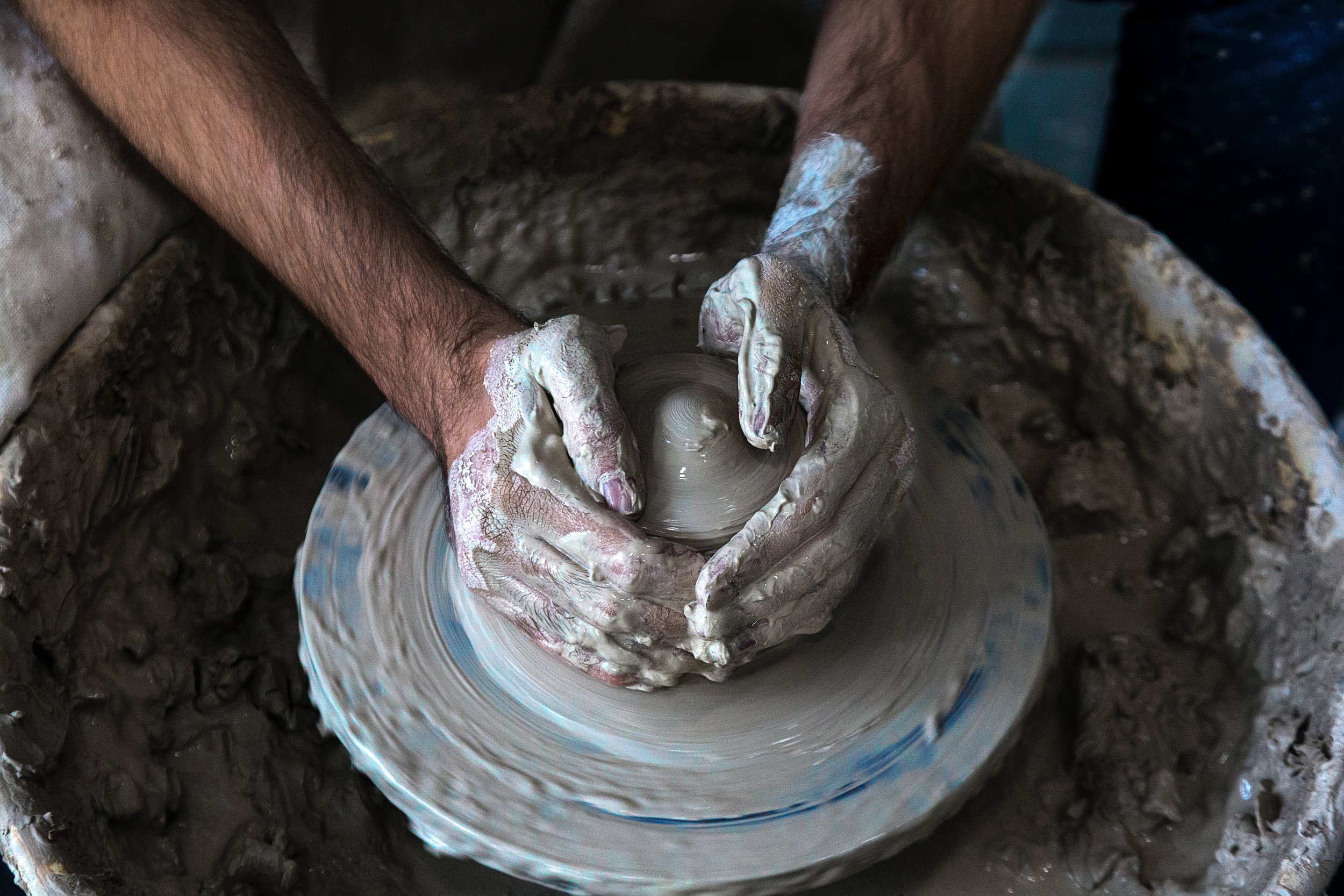
the process of change
Part of developing skills for recovery includes paying attention to what happens in our body.
Bringing reconnection back to the body, acknowledging its existence, accepting that it is here, accepting that is with us, and has information to share with us, is the process of embodiment.
When we have been living in such disconnection from the body, it takes the conscious competence - aka conscious, mindful practice of tuning into the body - to pause, listen, and feel. We have to unlearn the skill of not tuning in and learn how to attune to our bodies for a new way of relating with ourselves, our intuition, and our environment to emerge.
We prepare the nervous system to hold the embodiment of the change that we wish to see in our life as part of recovery. We practice embodying and energetically holding the higher frequency of this healed embodiment.
We can practice small amounts of pausing and sitting with the body on a day-to-day basis, to start building capacity to hold more emotions and sensations, rather than being overwhelmed by the present moment. There is a opportunity to notice the habitual responses of our nervous systems, the habitual flight, fight, freeze energetic signatures that often have been developed and established as a result of trauma.
When we see the map of our nervous system and how it came to be developed, we become aware of our patterns. With this greater awareness, we can move in and out of these patterns with more intentionality. The more we practice this kind of awareness, which is called interoception (sensing the internal states of the body), we have increased ability to respond to challenging or triggering situations with more clarity and perspective.
Recovery is being able to ride the challenging moments, whilst staying anchored in the body rather than running away from them through engaging in eating disorder strategies like restricting, purging, overeating, or over-exercising.
As we are develop ourselves for recovery, it is important to nourish our conditions to make the whole process a bit easier to navigate. This means getting good rest and sleep, eating well for the gut and brain, hanging out with people who feel safe and supportive, living in a clean environment, getting time outside in nature, throwing away anything in the physical home that feels stagnant, moving mindfully, meditating, and aligning with our higher intentions, standards, ethics, and values.
Thus, there is the hardware and the software that needs to be swept through and tended to so that the new upgrades can be integrated into our system.
What are some things you can do to shift or upgrade your life to support the development of your recovery skills?
Below are some skills we can all practice and develop for our eating disorder/disordered eating recovery wherever we are on the path:
Acknowledge. Own your experience of the eating disorder, accept it happened, and take responsibility for the next steps.
Reclaim. Open up to your empowered, true self. Recognise your power and your medicine. Go within and find a reason to evolve beyond the current circumstances. Recovery is in your hands.
Observe. See yourself and your reality from an objective, wide perspective. Identify how things impact each other (the cause-effect in all relationships). With neutrality, observe your patterns to escape, numb, or suppress. Set the intention to be with them, to be open, and to learn.
Honest. Be authentic and truthful with yourself with where you are and what you are needing.
Discern. Recognise what is important to you. Identify what stays and what goes. Listen deeply.
Tolerance. Build emotional resilience and regulation. Learn to sit with discomfort.
Vulnerable. Face the fear. Express your emotions. Surrender, let go of the resistance, and put down the armour.
Soothe. Learn how to recalibrate, calm, and rebalance your nervous system without the eating disorder tactics.
Mindful. Stay alert to truth, challenges, and opportunities. Maintain an open perspective. Listen to feedback from others, the environment, and your body.
Compassion. Befriend yourself. Practice non-judgement towards yourself and others (including diet culture). Remember all that you have overcome and celebrate who you are today.
Trust. Allow room for ambivalence. Trust in your innate healing capacities. Trust in the medicine. Trust that you have the power to heal yourself and .your innate healing capacities Trust it is all going to be ok. Trust the journey you are on, that you are in the right place at the right time, learning the right thing.
Openness. Recovery means meeting your growth edge, confronting your limiting beliefs and old narratives with an open heart and mind. Facing discomfort and fears require courage, resilience, perseverance, and self-compassion.
Connection. Connecting with something greater than yourself, and dedicating yourself to a higher purpose, keeps you in recovery. Recovery is not just about and for you - it ripples out into the collective, contributing to the evolution of humanity, impacting past, present and future timelines. Your healing ripples out into communities, giving them permission to thrive, flourish, and heal. It is about coming into right relationship with the interconnected web of all existence. This is not an individual process. Healing is sacred reciprocity.
Healing occurs when you consciously reconnect with your true self - the wise, loving, creative essence you are at the core.
What are some other skills and characteristics you can develop that haven’t been mentioned above. Feel free to share them in the comments.
All of these skills can be practiced in titrated, manageable bite-sized ways so that the nervous system can slowly integrate these new pieces in a way that that makes sense.
Rather than surprising the nervous system with too much change too quickly, we want the healing process to be slow and steady so there is enough time to integrate.
May we continue aligning with this path of recovery and with the greater intention of healing for ourselves and for the world, and practice and develop the inspired skills, and take the empowered actions required to become the authentic embodiment that we seek.

Making Space: Eating Disorder Recovery
What does it mean to be in eating disorder recovery?
*
*
*
What I am feeling in this moment for my own eating disorder recovery is a discovery of w i d e n i n g.
This has been one of the lessons I have learnt through my journey of eating disorder recovery, with the support of somatic practices, microdosing, and plant medicine.
Recovery is a widening that happens within. It is a widening within oneself whereby one is able to be with the full range of feelings - from pleasure to pain - rather than existing in a small bandwidth of existence that the eating disorder prescribes.
There is a sense of wide, open perspective whereby one can see with clarity. There is an ability to be with whatever is arising - even if it’s challenging - with a sense of broad equanimity. There is a widening of one’s capacity to be with challenges with a sense of grace and resilience.
Whilst there is a sense of increased capacity to be with discomfort and to hold feelings of pain, one is also building capacity to be with goodness. Recovery is to increase one’s capacity for closeness.
What I see with those who are navigating eating disorders often feel two things at the same time: “ I don't want to be close to anything” and “I desperately want to be close to everything.”
Individuals who are navigating eating disorders want to disconnect from so many things, and at the same time, want to deeply connect. Often the fear of connection is so strong that it overrides the desire to reach out. In this place of push and pull, there is a narrowing of what is available to feel, experience, and hold. It can feel like there is a lot of energy that gets trapped in this narrow place within.
This is why when one is deep in disordered eating, it can feel so overwhelming because there is a lot of energy internally, and not enough space for this energy to move.
And so in eating disorder recovery, one works at increasing this capacity and the space within so that the energy has more room to move, to release, and for new energy to flow in. There is fluidity and resiliency in being able to move with the tides and waves of energy.
Recovery is being able to be with expanded states of energy - and contracted energy - and the skill in which to move between them consciously.
Recovery is being able to allow the feelings of pain to be here. In the recovery process (aka the upgrade of awareness), things are bound to bubble up, challenges arise, and shadows emerge. Recovery is not about feeling good all of the time or no longer feeling pain. It’s about how one is able too hold the pain.
As part of this human existence, the contract each human signed is that suffering and challenge will be here but it is how we respond to it. So recovery is having the strength and softness to be with whatever arising. Those who embark on recovery are able to manage and hold this ever-changing energy that's happening inside and around with perspective, grace, centeredness, and trust.

Eating disorder recovery is about creating space within.
Moving from a narrow to a wider existence also means greater intimacy and closeness. Plant medicine and psychedelics has reminded me how interconnected and close we all are.
Somatic therapy has taught me to remain close to my own self despite what has happened, how I feel, or whatever shadow is present.
In the depths of an eating disorder, there is small window in how one can relate to others, engage with the world, and with oneself. It can feel very hard to come close to people. Intimacy requires being close and vulnerable/open/wide enough to be seen by another. When one allows an opening and a widening within, deep, close connections with others are made.
Eating Disorder Recovery is about widening, expanding, and being seen.
An eating disorders keep folk in perception of being invisible. It can feel safe to invisible, but deep down, there is often a feeling of wanting to be seen; and wanting to connect on a very deep level. It can feel scary to begin that movement from narrowing to widening, from invisibility to visibility, in all shapes, colours and parts.
Psychedelics help individuals move from into the heartspace more easily, making is more accessible to connect all the different facades of who we are without judgement, with more acceptance and kindness.
In this process of becoming more intimate with life, one is able to touch the goodness, the sweetness, and the tenderness of life. And what can come up is the belief around receiving this goodness. What happens in your body when you receive goodness? And often for people with eating disorders, there's a sense of “I don't deserve this goodness/pleasure/sweetness.”
Thus, recovery is not only widening the capacity to feel and to receive, but there's also a shift of beliefs. There is movement from “I don’t deserve this warmth” to “I do deserve this warmth and goodness, and am allowed to receive it and have it in my life”. Being able to embody and integrate this warmth is part of the process of deepening of feeling and being.
Recovery is about coming out of tight, small, narrow patterns of stress survival response that use food and the body to cope and adapt. It is being able to detect when there is a tightening, an evaluation of whether there is threat, and opportunity to respond to the environment with greater openness and understanding.
Recovery offers one the chance to find and create more safety in life by creating real, genuine safety within and with others. The eating disorder likes to keep us separate, away from others, and isolated. Often there is a belief (that developed early on for good reasons (which is a story for another day)) that “it is dangerous to come into contact with others.”
Recovery asks each individual to move into connection, to build relationships that are intimate, genuine, sincere, and safe so that new imprints can be laid within the nervous system, leading to new blueprints and new realities.
There are new beliefs that form in recovery such as, “I do belong”, “I am safe”, “I deserve this connection” and “I deserve this goodness.” In this state, the survival responses that use food and body do not have to work so hard.
In essence, the eating disorder do not have to be there anymore because the inner foundation has shifted from an brace to an embrace.
This is the natural maturation out of the disordered eating behaviors. Once there is this felt sense of safety, a felt sense of connection, and a growing belief of belonging and deserving, the eating disorder cannot survive.
In recovery, we no longer feed the eating disorder and starve the true self.
Walking this transformational path leads to a widening, deepening, and expansion.
There is expansion of the heart as well as expansion of the mind to perceive differently. It is clearing of the perceptual apparatus and seeing the whole forest rather than just the one tree. And in this clearing and widening there is a new reality that is before us.
What is recovery to you? How has recovery changed you or impacted your life and the people around you? Recovery is also so much more than just healing for ourselves: It impacts people we know and in ways that we may never see.
Thank you for showing up to this work.
Photo by Casey Horner on Unsplash

Exercise and Movement in Eating Disorder Recovery: Is it Healthy?
When is movement medicine for people in eating disorder recovery?
*
*
*
I have been walking my own disordered eating recovery path for many years, and a big part of healing was coming to understand what joyful embodied movement was.
I remember how I used to play spontaneously and care-free as a child, and then as I got older, movement became so warped, punishing and punitive as I become more enmeshed in diet culture and my eating disorder.
Before I dive into this topic of exercise and fitness, I want to acknowledge that I exist in a white, thin, able body, and this privilege means that I have not had direct experience with race, weight or body discrimination. I recognise that I do not know what it’s like to be in a body that is not supported by diet and fitness culture, and that I will do my best to listen to and learn from other people’s experiences.
my eating disorder and exercise addiction background
As a child, I was quite active, participating in ballet, netball, swimming and horse riding. I took ballet and horse riding competitively and felt the pressure to perform perfectly. F
rom a young age, I remember being told to suck in my tummy during ballet class and comparing my body to other girls in class. I then left the world of ballet because I felt it was dangerous for my mental health; it seems that at the age of 14 I had a sense that my already-fragile body image was not resilient enough to face the pressures of the dancing culture.
I then pursued horse riding and dove deeper into competitions, and realised that even amongst the horsey people, everyone had some kind of relationship with food and body, including the unspoken belief that one couldn’t be a fat horse rider. It was hard to escape.
By the time I got to 15, my eating disorder was full on. I was restricting my food and engaging in intense gym activities. I didn’t know back then but I was addicted to exercise. My dietician and therapist at the time would ban me from exercise when I lost weight. It would trigger and infuriate me. Exercise was my safety net; having it taken away from me was like having my whole (small) world unravel before me.
By 18, I went to an in-patient clinic, and I would still find ways to sneak in exercise by doing push ups and ab curls at night or in the corner of some empty room - little did I know there were camera everywhere so I got caught. It was awful to be caught exercising; I felt so ashamed and embarrassed.
Despite being caught and banned, I would still try fill every moment with exercise.
I couldn’t tell when enough was enough.
The exercise and the eating disorder was never enough, and similar to my weight, I could never be thin enough. My lifestyle reflected that same energy: I was driven, always busy, hard working, and based my worth on my productivity, my doing-doing schedule and being constantly active. Slowing down was a threat and could lead to rejection. I didn’t know what was enough and I wasn’t ever enough.
Then I found yoga - which became some form of bypassing. If I’m doing something spiritual, then surely I’m healed? This was my ego’s way of conveniently avoiding the problem that I was still addicted to exercise. And then I started teaching yoga; fitness was wrapped into my identity and career. I was known by students for teaching hardcore yoga asana/movement classes. There was a part of me who enjoyed being perceived as hardcore. It played into a very old narrative that I held onto from childhood: the story of being special. It was the old narrative of “dynamite comes in small packages” coming up the surface again. I so badly wanted to surprise, be different, be admired. I felt recognized for not being average for my age, ability or size. My size was wrapped with my identity and it fueled my ego. By being smaller than others yet just as strong as them, I created the story that I had some kind of superhuman strength which (I liked to think) people admired.
This false sense of pride was only covering up how low my self-worth was and how much pain I was in.
My eating disorder, exercise addiction, and body dysmorphia were reflections of unresolved self-esteem issues which I tried to manage by fixating on appearance for external validation. This is what diet culture is about: keeping us focused our bodies, weight and food - on the external – robbing us of our power, passions and purpose. And this is what eating disorders do for us too: keeping us fixated on our external appearance, weight and food instead of what is going on inside of us.
overexercise as a fight and flight response
The way I used exercise was a reflection of how exercise was a symptom of, and strategy to manage and process trauma.
What thoughts and feelings come up when you are unable to exercise? If you don’t exercise when you *should have*, what do you experience inside of your body?
Exercise can be a way to purge energy when things feel too close, too much, too loud, or too overwhelming. Whilst exercise can help us be in the present moment and get into the flow, for many of us, exercise can be used to avoid the present moment: It is a strategy employed by the autonomic nervous system (the nervous system that rules our flight/fight/freeze in response to danger) to get rid of a lot of excessive energy, or exercise can be used to try feel something, any sensation.
On the one hand, exercise can get rid of anxious energy, and it can also bring someone out of a more numb state. Either way, these are attempts to regulate; the nervous system is trying to bring the body down or up - and into homeostasis.
Sometimes we have never learnt how to slow down. Sometimes we were told to stop before we were ready. Sometimes a certain experience ended before we were ready. How does your body hold these memories of “I haven’t done enough” or “there isn’t enough for me?”. For many of us engaged in excessive exercise, slowing down is perceived as a threat by the nervous system.
Being unable to yield, slow down and pause shows up as: Binging because one cannot experience completion; restriction because one cannot finish completely; excessive exercise, hyper-vigilance; perfectionism; and over achieving.
Resting can feel like a threat and unsafe. So our nervous system tells us that in order to feel worthy and that we belong, we may have the story: “exercise is something I need to do often. If it feels difficult, I am weak. If I take breaks, I am lazy or lack discipline. If I can’t keep up with others, I am not good enough. If I am not as strong as I was, I need to fix it. If I don’t look like everyone else in this space, I don’t belong. If I don’t exercise, I’m not good enough, and when I exercise, it still doesn’t feel like enough.” Any of these sound familiar?
So excessive exercise becomes the symbol for the fear of yielding. And when you add the layer of diet culture and a good dose of hustle culture, you have a spicy soup of manic exercise that we see in fitness culture today.
the fanatic fitness culture
Perhaps you recognize this trap: you come across a new diet/cleanse/wellness plan, which promotes that you will become not just thinner and fitter but also happier, sexier, richer, more popular, and a better person. The sad truth is that in our culture today, weight loss can sometimes lead to attaining a higher status (weight stigma causes people in larger bodies to earn less money, have higher rates of depression, and social isolation than people in smaller bodies).
However, weight loss is temporary, and weight cycling puts people’s health at greater risk. And we know that people in larger bodies can and do have happy lives and successful careers without needing to shrink their bodies.
So the real problem isn’t body size, but the belief system that keeps people chasing weight loss in order to secure equal rights. The solution isn’t pursuing weight loss, but dismantling diet culture.
Diet culture and the health and wellness are not interested in your health or wellness, and here’s why:
Diet culture makes us believe that the stereotypical “fit” look is the only look, and those who fit that ideal are the only ones engaging in fitness and health right.
Fitness culture drills in the idea you have the deny or reward yourself food based on your workout.
Needing a modification for an exercise means you are less skilled.
Skipping workouts = you are are not committed enough to your goals.
Ableism is the foundation of the fitness industry that implies that those who fit the “fit ideal” are worth keeping, worth saving, and accepted, and anyone viewed as unfit are disposable, rejected, and should be left behind.
The more we try to attain these beliefs and ideals, the more our life slips from our grasp. Moving away from the homogenized fitness industry into one that is inclusive, creates spaces that are anti-diet, trauma-informed, compassionate, harm-reductionist, fat-affirming, accessible, anti-racist, and ethical. These spaces allow for people to say no; there are options in exercise classes to go at your pace, to take breaks, to lessen the resistance. This is a call to action for fitness and movement spaces to be more supportive to diverse bodies.

So how do we start to change this? Well the truth is, nobody knows you and your body better than you. Diet culture has made us believe that they know best, but really we do know, and finding our way back to hearing our intuition and body speak is possible.
The more we can be truthful with how we are feeling, the more authentic we can be with our movement choices.
When you become honest with where you are at, you may realise that exercise is taking up your creative energy and taking up a huge chunk of your life.
You may need to change movement activities that are not recognized by the eating disorder voice; you may need to investigate what joyful movement is for you; or you may need some time to rest from exercise. When we move from compulsive, guilt-based movement, our priorities shift – and that includes the people we hang out with.
In this process, make time to process any fears that come up related to letting go of a fitness community and connections; grieving the release of an fitness identity; and sitting in the unknown space where fitness used to occupy.
In an Ayahuasca ceremony in 2020, I received a download from the medicine that “I am a mover”. What I gauged from that insight was that whatever the circumstance to keep moving the energy. When things get tough, move the density. When things are confusing, move the energy to clear the pathways. When things are flowing, move with gratitude, ease and grace. I move from the inside-out.
Being able to shift and manage energy effectively, with resilience, compassion and clarity are part of the eating disorder recovery journey. The disordered eating behaviours are showing us how overwhelmed we are by the energy inside and around us, and so part of healing is learning how to resource to body so that it no longer needs to fight, run away, or shut down.
You can work with sacred plant medicines or psychedelics in helping you look at control patterns related to exercise, body, weight and food, as well as experiencing the felt sense and vibrational frequency of being completely free from the grips of exercise addiction.
Let us get real with our intentions around why are exercising.
Why would you want to move if weight loss, weight management, or manipulating body were no longer the goals?
What are you running away from? Is your body still holding survival energies from a past trauma and as such is still trying run away from something scary that hasn’t been resolved, processed, and released?
What are some intentions around moving your body that are unrelated to weight? Maybe you’re thinking about moving in nature, incorporating exercise into a work break, dancing to express yourself, or finding a more resonant community of movers who like to play.
What does nourishing exercise that contributes to your overall self-care look like? Is it possible to move for pleasure? Pleasure is essential for healing and liberation; and for many of us with eating disorders and exercise addiction pleasure, play, and desire are difficult things for us to allow.
Instead of focusing on the external, what makes you strong from the inside out? Focus on your inner strengths like vulnerability, authenticity, creativity, compassion, kindness, capacity, courage, and reliability - all of which have nothing to do with the body. Find ways to harness these beautiful qualities.
Give yourself time to question how and why exercise has served you through tough times, and what it wants to evolve into now. Eating disorder and exercise addiction recovery are inner journeys of the true self, a reclamation of one’s true essence and essential, unbreakable qualities.
Honour the rest, the pause, and the moments of stillness.

Somatic Sync for Eating Disorder Recovery
My eating disorder did everything it could to get me away from my body. Feeling the weight of my legs, the breath in my belly, the fluttering of my heart. I could be with none of it. Everything movement triggered me. With this extreme separation from my body came an enormous amount of obsession. I was constantly weighing my body; tugging my skin around my arms, belly, and thighs; prodding on bones; staring with disgust in the mirror. I wanted to run away from my body and yet every moment was filled with me observing, berating, shaming, punishing, and hating my body. The more I ran away from it, the more I ran into it. I was stuck. I had nowhere to turn to. Every direction was met with a wall of resistance and judgement… and with my body.
My body was an obstacle that had to be overcome, and to be overcome with great force.
13 years later into recovery, I no longer push my body away, cast it aside in a corner, or ridicule it into silence. Yes, there are moments where I struggle to be in my body, but it is less painful, and the moments come and go with more ease. I now see my body as a vessel, a temple, made up the elements, part of Nature, Nature itself, a mystery, a house of forgiveness, my story, a gift.
I have come to relate to not just my body but my soma.
According to Dr Arielle Schwartz, one of my somatic teachers, says that the soma is the interconnected thinking, emotions, actions, relating, and worldview, all embodied. When we relate to our soma, it is not just the physical structure but all these thoughts, stories, beliefs, and emotions that live in, through, and with the body.
For those of us in the world of body phobia, body dysmorphia, disordered eating, food rules, and exercise as control and punishment, the body is generally related to in an objectified and utilitarian way. And let’s be honest, the culture in which we live encourages this way of relating to our bodies. From this lens, the body is seen in parts, for its physicality, separate from the self. It is seen as something to manage, steward, control, keep healthy, or feel ashamed about. From the lens of somatics however, the body inseparable from the Self and is part of how we choose to live, act, and relate.
This means that our beliefs, reactions, patterns, and survival strategies live in our somatic structures, that is in our neuronal pathways, cells, tissues, muscles, and organs. These embodied patterns, which are carried out by our habitual practices, are reinforced by the social structures and systems in which we operate. We cannot change these survival-based habits through conversation, thought, or willpower alone. This is because the language centers in the brain have little influence over the survival centers in the nervous system and the brain. This is why eating disorder recovery through talk therapy alone often does not lead to long-term change. Of course, language and thoughts are important, so in the big picture we want to align head, heart, gut, and movement. Body-brain. All connected.
Our bodies tell our stories probably more honestly than our minds. Our bodies hold it all. They tell our life stories. Our bodies are shaped by our stories, and our stories shape our bodies.
In this way, the body is speaking about its survival. The eating disorder symptoms and behaviours are the ways in which the body is speaking about how it makes sense of life, what it takes to survive, what it means to be alive, and what the soul needs to thrive in the world. When we begin working with a mentor, coach or therapist who is somatically-trained and eating disorder sensitive, the body takes center stage in the therapy room. Here the body is not an obstacle to overcome, or something considered last in recovery, but rather what helps us recover. It is a resource in the healing path, and we learn to resource the body as a tool in healing. The body is a source of wisdom and needs to be understood. We explore the body experience (in, down, through) rather than focusing on body image or how it looks on the outside.
For someone to be somatically aware means that they are respectful of the core connection between cognition, affect and soma. They understand the difference between top-down and bottom-up processing; “bottom-up” means that our body is the first in line that experiences life, which then impacts our feelings and finally our thoughts and reflections. You can imagine the frontline of an army who react first to whatever is happening as the body, then whoever is behind the frontline responding to whatever just happened as the emotions, and then whoever is behind all of them - as those most removed from the experience – as the brain. Top-down sees it in reverse. The most removed (or with most “rational perspective”) decides what emotions to feel and how the body should react. However, the body operates at different pace than the brain as it rooted in the present moment, which is an important function of the nervous system in keeping us safe from micro-moment to micro-moment. For people with eating disorders, starting with the body and the nervous system is crucial in orienting feelings and thoughts towards recovery.
Nervous system regulation can be accessed through somatic resources such as grounding, centering, breath, orientation, and working with posture, movement, facial expression, and gestures. With the body we learn how to build trust and rapport, safety, self-worth, and a sense of self.
Indeed, recovery is a process of deepening embodiment – with the body you already have. You can read more in depth about embodied eating disorder recovery here. Embodiment is awareness of the body and awareness of the world through the body. We build embodiment by expanding what we are aware of (mindfulness) and expanding the seat of consciousness, that is where we are aware from.
So why should we start with the body first? Our nervous system needs to be regulated first. Our body influences our feelings, thoughts, and how we see the world. When we are regulated inside of our own bodies and know how to move in and out of spaces of connection and disconnection with understanding, we start to see and act with the world differently.
Polyvagal theory, developed by Stephen Porges tells us that when our nervous system is regulated, we feel safe, connected, and live in a reality where there are endless possibilities. This is creates a positive feedback loop of inner and outer perception. What Polyvagal theory has also shown us is that a regulated nervous system correlates with better digestive functioning.
For those of us in eating disorder recovery, we may have experienced some challenging digestive issues. And when our digestion is not working well, we don’t feel good about life in general, right? And this does not only apply to people in recovery. Think about, when we get anxious, we may have a runny tummy. If we have experienced some kind of depression, our digestion works a lot slower. If we are hyper-mobilised, where there a lot of racing energy, our digestion gets impacts. If we are immobilised or lethargic, our digestion reflects that. This is because our vagus nerve (hence “vagal” in Polyvagal), which is highly myelinated, runs from the brainstem all the way to the gut influencing nervous system and digestive functioning.
Our nervous system is constantly listening inside the body, out into the environment and between other people for cues of safety and threat This is called “neuroception”, the internal surveillance system that looks for cues of safety and danger 24/7.
If for whatever reason we no longer feel safe, we move into our sympathetic nervous system where we experience increased blood pressure, rigid muscle tone, and heightened arousal to fight or run away from the threat. This tension and constriction don’t support our capacity for digestion when we are in the fight or flight mobilized state. And many of us are living in this state constantly. With this raised cortisol, higher levels of inflammation, and tension, our digestion and ultimately worldview is impacted. Sometimes we find ourselves in an immobilised state, where the threat is so big that all we can do is go into shutdown. This dorsal state, which when is functioning well, helps with rest and digest as this is where the vagus nerve finally reaches the stomach, spleen, kidney, intestine and colon. However, when there is a whole system freeze (the extreme function of dorsal), this impacts our digestion in the same way too.
So, it seems like we need to feel safe to have good digestion, and good digestion to be connected in the world. For those with eating disorders, this can seem like a chicken or the egg scenario.
To begin working with the soma, we come to work with its rules, not how we think it should. If we are still engaging with eating disorder patterns (big or small, conscious or unconscious), we must remember that the mind is not a reliable place on how to engage with embodiment processes. The soma has its own intelligence, and we must follow its rules. We understand adaptations and shaping have happened on there own terms as ways of survival (indeed, eating disorders are more survival adaptions than disorders).
To be with the soma, we slowly go into those places that are contracted, holding and touching in the way that is moving with the energy rather than willing it to move any differently. Focus on how this part as you find its location, the sensation, how widely it spreads, and how deeply it runs. We can connect more resilient places in the soma with more stressed or numb places, and allow the aliveness to move through the soma, opening spaces for sensations to move and aliveness to flow, thus allowing our whole Self to move with purpose and connection. We allow movement, we allow change, and remember (which is probably something that people with eating disorders fear to face), that the only constant is in fact change.
Through working with the soma we develop adaptability, capacity, tolerance, fortitude and flexibility. Through this somatic work we develop resilience and ways to navigate the world with safety, assurance, and empowerment. We learn to trust our bodies. We learn to be with our Soma.

Somatic Therapy for Eating Disorders
Finding ways to connect,
Rather than trying to be oh-so-perfect.
Remembering to listen to my body’s signs,
As direct guidance for my life’s design.
Always empowered to choose what I allow into my space,
And this takes practice, patience and pace.
Sometimes the feelings were just too much,
So my body disconnected and went out of touch.
My body has and will always know what to do;
It has carried my trauma so I could just get through, and this it will continue to do.
There is deep wisdom in these inherent workings,
I am grateful for my body’s constant ability to be adapting, assessing and reworking.
The somatic movements that my body makes
Is for the sake of my safety and so I welcome it all like a bird song at day break.
I take a breath. I offer my body nourishing rest, wholesome food, soulful community, and play so the signs I receive are clear and lead my on path’s highest way. I give thanks to this temple.

As a person who has experienced an eating disorder, learning to trust my body has been one of my greatest challenges. There was a point in my recovery journey where I realized that I had done all of this talking and cognitive analysis in therapy but was unable to just be in my body. I came to accept that if I wanted to heal from the eating disorder, the body (which I so feared), had to be included in the recovery process.
This insight propelled me into the world of somatic therapy. I started learning how the body, along with supportive external resources, has inner wisdom that is self-directing, self-connecting, and helps us unfold towards wholeness. By coming into contact with the body, breath, energy, emotions and thoughts, we can begin to see how we are doing moment to moment. And if done carefully, it is not as scary as one may think.
By bringing this information into the now, and holding it with compassion, healing can take place; indeed how the body is a resource and can be resourced is part of the the healing process from a somatic perspective.
From a somatic therapy lens, difficult life experiences contribute to patterns of tension in the body, whilst developing body awareness helps us access an internal source of wisdom that guides the healing process. And we engage more body awareness and healing movements at a pace that can be tolerated.
For people with eating disorders, the body is a scary place to be, and so the pace is slow so that one does not feel overwhelmed. I remember how I couldn’t even practice mindful breathing - it was just too triggering and upsetting. And so I see with my own clients, the body is a sensitive portal to enter. For some, there is a numbness or there isn’t a big enough language to describe what is going on.
By creating a safe space together, we learn how to build up our tolerance to hold and describe bigger emotions. But there’s no rush in this work. When there is trauma, there is a fear of what emotions are stirring beneath the surface and of one’s inner experience. To face trauma, we have to face what is uncomfortable. Everyone is ready at different times as resources, support and stability are built in accordance to the individual. Only once stability and safety are built internally and externally, can the trauma be processed.
First and foremost is creating the space between client and coach/therapist/mentor/loving human who is offering their attuned presence and an opportunity for the client to borrow their nervous system to practice co-regulation. From there, we develop conscious awareness of the somatic experience by paying attention to what the five senses, proprioception and interception are picking up on as it’s happening in the room, between the two parties, and inside oneself. This is the first step to deepening one’s embodiment.
As we strengthen the somatic resources through body awareness, conscious breathing, co-regulation, grounding techniques, empowerment, receiving support, building affect and sensation tolerance, and developing boundaries, we can come to understand the impact that the trauma had on the body, reclaim healing movement, have a somatic release, and then work on integrating this new body into the world.
For my own life, I cannot pinpoint a moment when there was a traumatic event in my childhood, but I can assume that there something (or multiple things) that contributed to my body picking up eating disorder behaviours as a way to cope. These behaviours kept me safe and in a state of defense against feeling my body and internal landscape, being present, and connecting with the world around me.
Over time, by building tolerance to hold bigger emotions and sensations through developing my own supports and resources; trusting that it’s safe to pause and feel what is going on inside of me and sense into sensations and emotions; and allowing myself to receive the messages from these emotions and sensations, my reliance on eating disorder behaviours organically faded as I have naturally matured out of them. This is because new tools, resources and ways of being in the world have been built, practiced and integrated into my life.
Ultimately, we learn how to become good at change. Eating disorders - and addictions - are perceived ways to control and keep things the same as a way to protect the individual. When we accept that the body is always changing, from a physical sensation to an emotion, we are able to ride the waves of changes that life fundamentally brings with greater ease.
Psychedelics, plant medicine and microdosing have been key allies in helping me get more in touch with what my body is trying to communicate with me. Since I have the pattern of numbing out or avoiding uncomfortable body sensations through the conditioning of the eating disorder, it is sometimes too easy to fall back into that way of existing. The sacred plant allies, Psilocybin and Ayahuasca, who I enjoy working with in small and large doses have been immensely helpful in getting me out of this particular rut and into feeling, honestly and compassionately.
Working with the body is an honour. It is the portal that remembers and transforms. Our body is our greatest work.
For those who are interested in working with me, I offer 1:1 sessions that focus on movement, mindfulness and/or medicine for greater embodiment, eating disorder and addiction recovery. Feel free to check out my offerings or contact me.
Photo by Maria Duda on Unsplash

Guided Yoga Nidra Meditation
So much of my own personal eating disorder recovery has been about slowing down. To try manage the energy inside of myself and the world around me, I used strategies like over-exercising as a way to purge and to run away. It lead to behaviours like restricting my food so that I could stop things from coming at and into me which oftentimes felt too fast and too much. I have come to realise over the years, one of the hardest aspects of my recovery has been to soften, open up and slow things down.
In February 2021, I was in a motorcycle accident in Nicaragua and fractured my tibia; I knew immediately in that moment that this was the way I was finally going to slow down. In fact, I intuited something like this was going to happen at some point many, many months before this specific incident. Something outside of myself had to come in to bring me to a halt - I knew I couldn’t do it all by myself.
And so I am grateful for this experience.
It showed me how I’ve used movement over the last 13 years, sometimes excessively and damaging, to suppress, neutralize or avoid overwhelming energy. When I was in the early stages of my recovery after my leg surgery, I finally got to experience the waves of energy, emotions, thoughts - the whole banquet of my human experience - without the hiding, distracting and altering. I was in all of it it and had to face all of it. I got to understand how so much of the movement I do in a day is to manage feelings of anxiety and fragmentation - but without giving myself time to really feel it, question it, or see it so that it could be transmuted.
During this potent time of healing, I found other ways to be with these feelings through breathwork, meditation, massage, sound and vocalization, painting and being in nature, allowing the winds to wash, cleanse and move through me. My understanding of how to find my center, to reground and regroup, expanded over the course of my injury recovery.
One of the ways of settling back into myself was with yoga nidra, a style of yoga that induces “non-sleep-deep-rest”, as Andrew Huberman likes to call it, where we find ourselves in a state of consciousness that is between being awake and asleep. Practicing yoga nidra induces the parasympathetic nervous system to come on and allows the sympathetic nervous system to take a chill. Our sympathetic nervous system governs our flight or flight, which many of us are in too much of the time, leading to chronic stress and subsequent health conditions. While we need this system to get out of bed, stay motivated, play and accomplish tasks, when used for extended periods of time it can cause issues with digestion, sleep and immunity. When we practice yoga nidra, we shut this system off and enter into the parasympathetic nervous system - rest and digest - thus calming the nervous system, improving immune function and deep cellular healing, supporting digestion and stress management, decreasing anxiety, blood pressure and cortisol levels, and inviting all of ourselves into the present moment.
And all you need to do is lie on your back on a mat or in bed, and allow yourself to be guided. There are many ways to be with the body, to move and transmute energy, and journey back to inner peace.
It’s now been seven months since my accident and my healing has been smooth and swift. To celebrate this little moment, I have decided to share a guided yoga nidra meditation with you which I actually created when I was still in Nicaragua in the first three months of my recovery.
Feel free to listen to this before you go to bed, in the middle of the day as a break, or before, during or after a plant medicine or psychedelic journey as preparation, support or integration .
Ground down, relax back, be transported, be transformed.

Photo by Anna Rozwadowska on Unsplash